
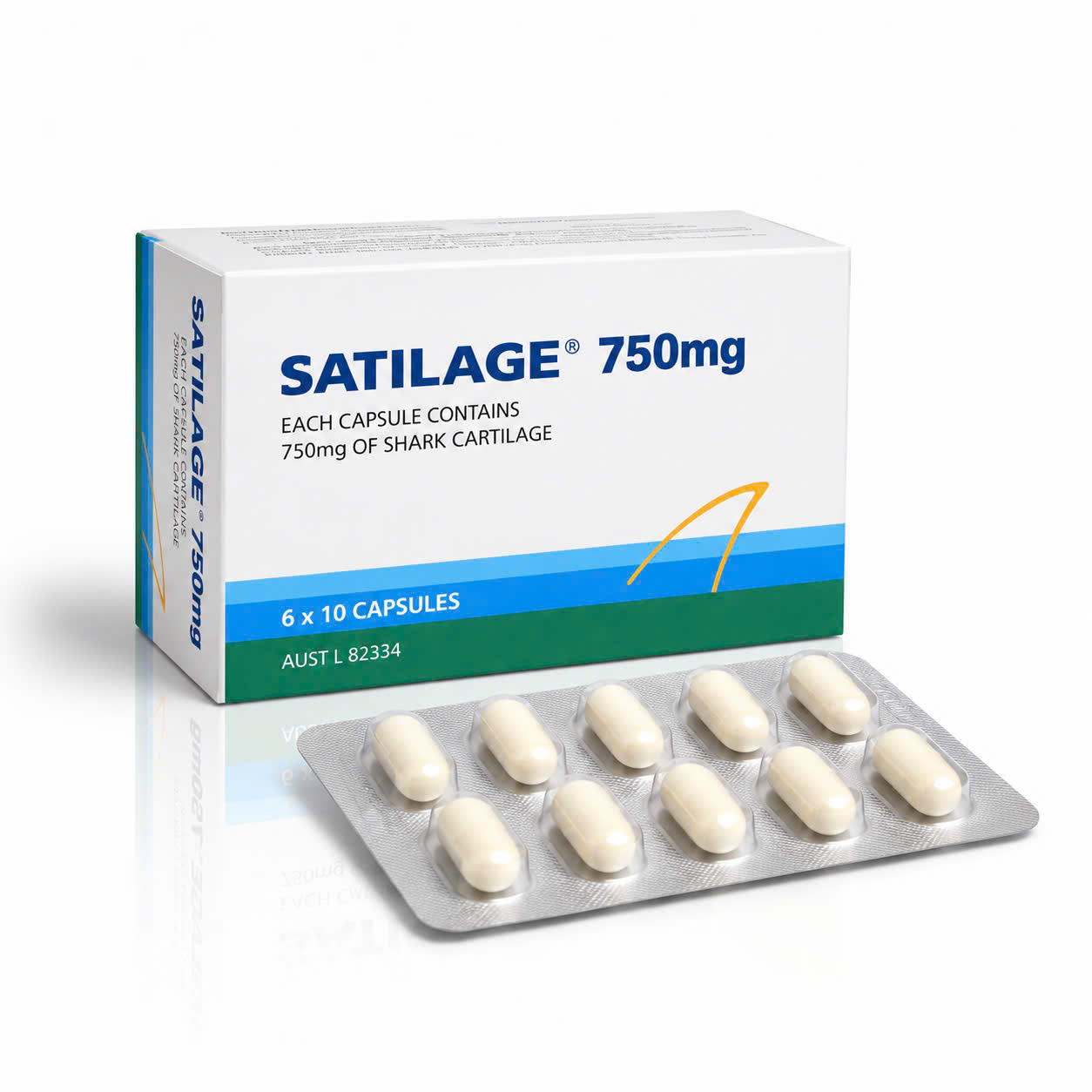
SATILAGE 750mg
Contains Shark Cartilages - Temporary relief of the pain of Osteoarthritis and Arthritis
Each capsule contains: 750 mg of shark cartilage
For the full list of excipients:
For the full list of excipients:
- Calcium hydrogen phosphate dihydrate
- Magnesium stearate
- Silica colloidal anhydrous
- Crospovidone
Therapeutic indications
Satilage is indicated in adults for the temporary relief of symptoms in mild to moderate osteoarthritis of the knee.
Posology and method of administration
Posology
Capsules can be taken with or without food.
- Adult only take 2 – 4 capsules daily or as directed by your heathcare professional
- Satilage should not be used in children and adolescents below the age of 18 (see 4.4).
- No specific studies have been performed in the elderly, but according to clinical experience dosage adjustment is not required when treating otherwise healthy, elderly patients.
- In patients with impaired renal and/or liver function no dose recommendations can be given, since no studies have been performed.
Capsules can be taken with or without food.
Contraindications
- Hypersensitivity to the active substance or to any of the excipients listed in section 6.1.
- Satilage must not be given to patients who are allergic to shellfish as the active substance is obtained from shellfish.
Special warnings and precautions for use
- Satilage should not be used in children and adolescents below the age of 18, due to lack of data on safety and efficacy.
- A doctor must be consulted to rule out the presence of joint diseases for which other treatment should be considered.
- In patients with impaired glucose tolerance, monitoring of the blood glucose levels and, where relevant, insulin requirements is recommended before start of treatment and periodically during treatment.
- In patients with a known risk factor for cardiovascular disease, monitoring of the blood lipid levels is recommended, since hypercholesterolemia has been observed in a few cases in patients treated with glycosaminoglycans
- A report on exacerbated asthma symptoms triggered after initiation of shark cartilage therapy has been described (symptoms resolved after withdrawal of product). Asthmatic patients starting on shark cartilage should therefore be aware of potential worsening of symptoms.
- Follow calcium levels in patients with renal insufficiency or cardiac arrhythmia.
- Consider discontinuation peri-operatively and post-trauma
Interaction with other medicinal products and other forms of interaction
- Thiazide diuretics: Shark cartilage contains calcium, and may cause hypercalcemia when taken with drugs known to elevate serum calcium, such as prolonged thiazide therapy.
- Anti-hyperglycemic agents: One patient with type II diabetes mellitus and renal carcinoma was noted to develop hypoglycemia during a phase I/II study using shark cartilage.
- Interferon and : Both interferon and possess antiangiogenic properties, and may act synergistically with shark cartilage to inhibit blood vessel growth, slow wound healing, reduce inflammation, or cause birth defects.
- Thalidomide: As an angiogenesis inhibitor, thalidomide may act synergistically with shark cartilage to inhibit blood vessel growth, slow wound healing, reduce inflammation, or cause birth defects.
- Experimental anti-angiogenic agents: Patients in treatment protocols involving other anti-angiogenic agents should avoid shark cartilage due to theoretical additive or synergistic activity.
- Cisplatin: Based on one animal study, cisplatin and shark cartilage may act synergistically against tumors, although there is no human supporting evidence.
- Calcium supplements: Shark cartilage preparations contain up to 25% calcium. which may have an additive effect when taken with calcium supplements, leading to hypercalcemia.
- Chondroitin sulfate: Chondroitin, a popular therapy for osteoarthritis, is a constituent of shark cartilage. Concomitant use may lead to higher than expected serum levels of chondroitin, with unknown toxicity (although 3 g one-time doses of chondroitin have been observed without adverse outcomes).
- Glucosamine sulfate: Glucosamine, a popular therapy for osteoarthritis (OA), in a constituent of shark cartilage. Concomitant use may lead to higher than expected serum levels of glucosamine, with unknown toxicity. Anecdotally, clinicians have reported increased insulin resistance in diabetics with high levels of glucosamine, although this has not been substantiated in clinical studies.
- Acidic fruit juices (apple, grape, orange, tomato, cranberry): Acidic fruit juices may reduce the absorption of shark cartilage.
- Keratan sulfate: Keratan is a protein measured in basic science research and experimentally as a marker of cartilage metabolism. A protein in shark cartilage reacts with the same antibodies as the keratan sulfate ELISA assay, which may lead to erroneous results.
Pregnancy and lactation
Pregnancy
- Although no specific human studies have been conducted, shark cartilage should be avoided in pregnant or lactating women, due to risk of impaired angiogenesis (other antiangiogenic agents, such as thalidomide, are known teratogens).
- There is no data available on the excretion of glycosaminoglycans presented in shark cartilage in human milk. No recommended as there is no data on the safety of the newborn.
Effects on ability to drive and use machines
- No studies on the effects on the ability to drive and use machines have been performed.
- If dizziness or drowsiness is experienced, car driving and the operating of machinery is not recommended.
Undesirable effects
The most common adverse reactions associated with treatment with shark cartilage are nausea, abdominal pain, indigestion, constipation, diarrhoea, headache and tiredness. In addition rash, itching, and flushing have been reported. The reported adverse reactions are usually mild and transitory.
The adverse reactions are classified according to frequency of observation: Very common: ≥ 1/10, Common ≥ 1/100, No Common ≥ 1 / 1,000 - ≤1 / 100 Rare: ≥ 10,000 - <1 / 1,000, Very rare <1 / 10,000 , unknown ( cannot be estimated on statistics)
Adverse reactions are grouped by system organ class:
Sporadic, spontaneous cases of hypercholesterolaemia have been reported, but causality has not been established.
Patients with diabetes mellitus
Blood glucose control worsened in patients with diabetes mellitus. Frequency not known.
The adverse reactions are classified according to frequency of observation: Very common: ≥ 1/10, Common ≥ 1/100, No Common ≥ 1 / 1,000 - ≤1 / 100 Rare: ≥ 10,000 - <1 / 1,000, Very rare <1 / 10,000 , unknown ( cannot be estimated on statistics)
Adverse reactions are grouped by system organ class:
- Common ≥ 1/100: as nervous system disorders (headache, fatigue), digestive disorders (abdominal pain, vomiting, diarrhea or constipation )
- Uncommon ≥ 1 / 1,000 - ≤1 / 100: skin disorders (redness, itching)
- Unknown: allergy, insomnia, dizziness, asthma, vomiting, jaundice.
Sporadic, spontaneous cases of hypercholesterolaemia have been reported, but causality has not been established.
Patients with diabetes mellitus
Blood glucose control worsened in patients with diabetes mellitus. Frequency not known.
Overdose
- Signs and symptoms of accidental or intentional overdose with glycosaminoglycans in shark cartilage might include headache, dizziness, disorientation, arthralgia, nausea, vomiting, diarrhoea or constipation. In cases of overdose, treatment should be discontinued and standard supportive measures should be adopted as required.
Pharmacodynamic properties
Pharmacotherapeutic group: Other anti-inflammatory and anti-rheumatic agents, non-steroidal anti-inflammatory drugs.
ATC code: M01AX05
Shark cartilage contains approximately
Shark cartilage may be useful in inflammatory conditions such as rheumatoid arthritis, psoriatic arthritis, and, in some cases, osteoarthritis. Specifically, it may be beneficial due to its anti-angiogenic effects as well as the presence of high levels of anti-inflammatory mucopolysaccharides such as glucosamine sulfate and chondroitin sulfate. Improvements in inflammation may be noticed as soon as 1 to 2 weeks after initiating treatment with shark cartilage; however, if no improvement occurs, patients should be advised to continue treatment for 6 to 8 weeks before a decision is made to discontinue.
Mechanism of action
ATC code: M01AX05
Shark cartilage contains approximately
- 40% protein (troponin-I, tetranectin-type protein, collagenase, cartilage-derived inhibitor/CDI, tissue inhibitor of metalloproteinases),
- 5-20% glycosaminoglycans (chondroitin sulfate-D, chondroitin-6-sulfate, keratan sulfate)
- The remainder is made up of calcium salts (up to 25% of some preparations) and glycoproteins (sphyrnastatin-1 and 2, galactosamines, glucosamine)
Shark cartilage may be useful in inflammatory conditions such as rheumatoid arthritis, psoriatic arthritis, and, in some cases, osteoarthritis. Specifically, it may be beneficial due to its anti-angiogenic effects as well as the presence of high levels of anti-inflammatory mucopolysaccharides such as glucosamine sulfate and chondroitin sulfate. Improvements in inflammation may be noticed as soon as 1 to 2 weeks after initiating treatment with shark cartilage; however, if no improvement occurs, patients should be advised to continue treatment for 6 to 8 weeks before a decision is made to discontinue.
Mechanism of action
- Exactly how shark cartilage works to achieve these results is not completely understood. One possibility that has been investigated is that chondroitin sulfate, one of the most plentiful glycosaminoglycans found in cartilage, may be one of the active ingredients for this role. This makes sense when considering that chondroitin acts like a liquid magnet, attracting fluid into the proteoglycans (i.e, large molecules that trap water like a sponge and make cartilage resilient22). This fluid acts as a shock absorber and also brings nutrients with it into the cartilage. Perhaps of greater significance than its fluid-enhancing properties, chondroitin sulfate protects existing cartilage from premature breakdown by inhibiting certain cartilage-chewing enzymes. Furthermore, chondroitin stimulates the production of proteoglycans and collagen that are needed for healthy new cartilage. Research on chondroitin sulfate has demonstrated that it is effective in the treatment of osteoarthritis.
- Studies were conducted in several different countries, but the results were always the same: patients treated with chondroitin sulfate experienced significant relief of pain, and enjoyed increased mobility
Pharmacokinetic properties
- Early research suggests that constituent proteins in shark cartilage are absorbed via the intestinal tract, and are bioavailable. However, data are limited at this time.
Preclinical safety data
- Animal experimental data relating to toxicity during repeated administration, reproduction toxicity, mutagenicity and carcinogenicity is lacking for shark cartilage.
- Results from in vitro studies and in vivo studies in animals have shown that glucosamine reduces insulin secretion and induces insulin resistance, probably via glucokinase inhibition in the beta cells. The clinical relevance is unknown.
Incompatibilities
- Not applicable
Shelf life
- 36 months from date of manufacture.
Nature and contents of container
- Box of 60 tablets, divided into 6 blisters, 10 blisters each, with a Vietnamese patient information leaflet. Made in Australia
Special precautions for disposal of a used medicinal product or waste materials derived from such medicinal product and other handling of the product
- No special requirements
Special precautions for storage
Below 300C in dry place, prevent direct sunlight.
Keep out of reach of children.
Do not use medicine beyond the expiry date indicated on the label or when the packaging is damaged.
Keep out of reach of children.
Do not use medicine beyond the expiry date indicated on the label or when the packaging is damaged.
Marketing authorisation number
AUST L 82334
Same Category
Related Products
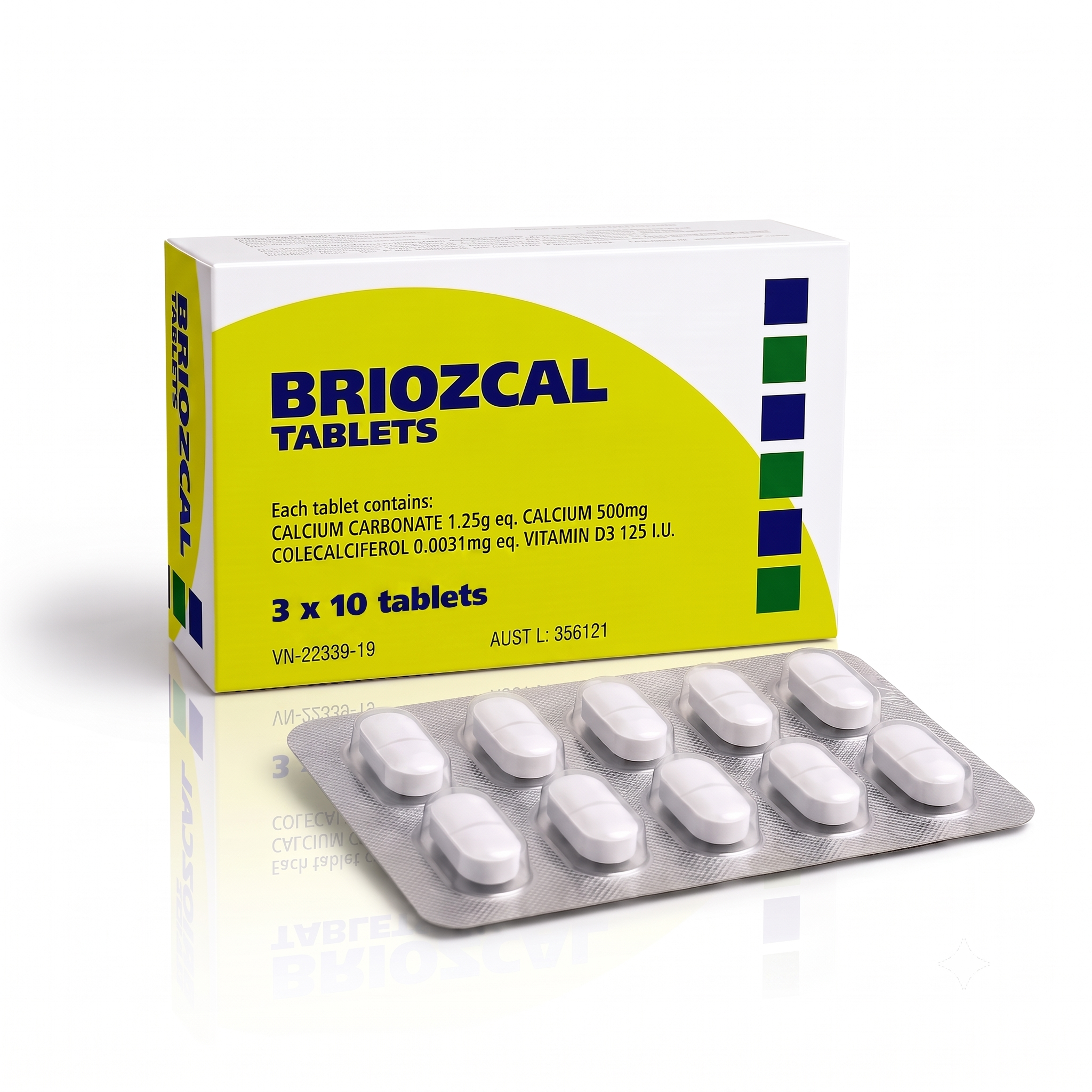
BRIOZCAL Tablets
Contains Calcium Carbonate and Vitamin D3 to strengthen bone and tissue
Box of 3 x 10 film coated tablets
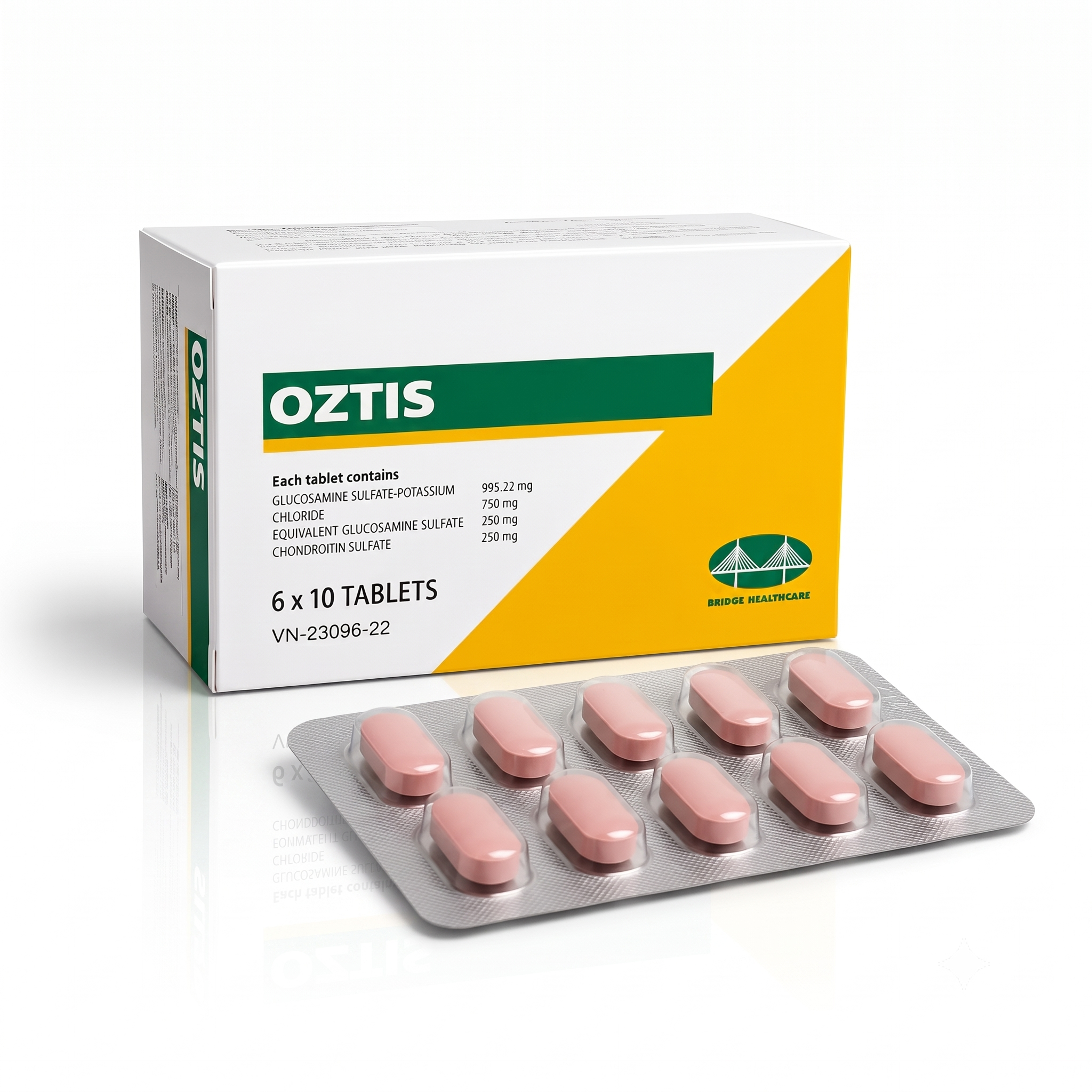
OZTIS
A combination of Glucosamine Sulfate and Chondroitin Sulfate to help maintain healthy connective tissue and mobile joint function.
Box of 6 x 10 film coated tablets
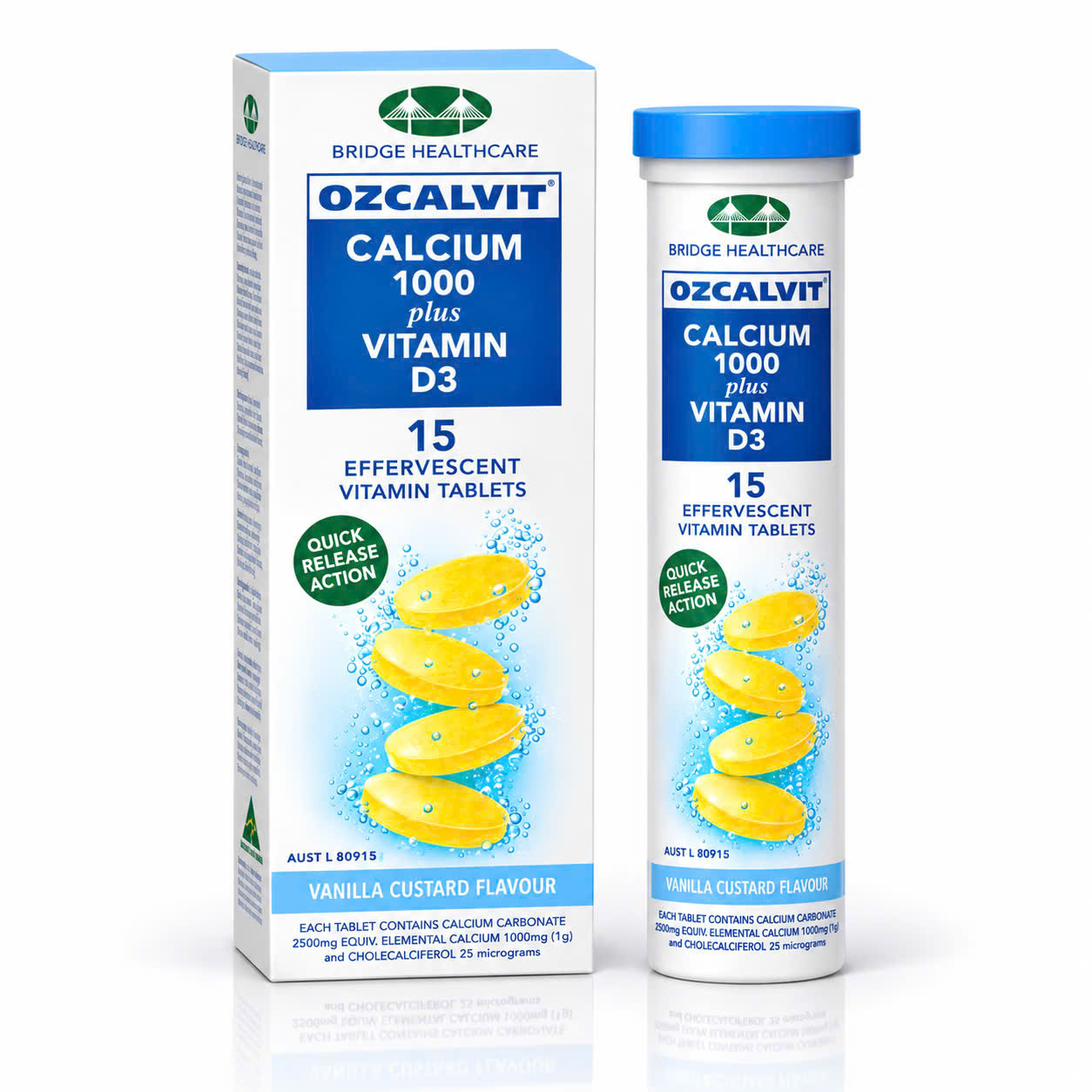
OZCALVIT 1000mg
Contains Calcium Carbonate and Vitamin D3 to strengthen bone and tissue
Tube of 15 effervescent tablets