
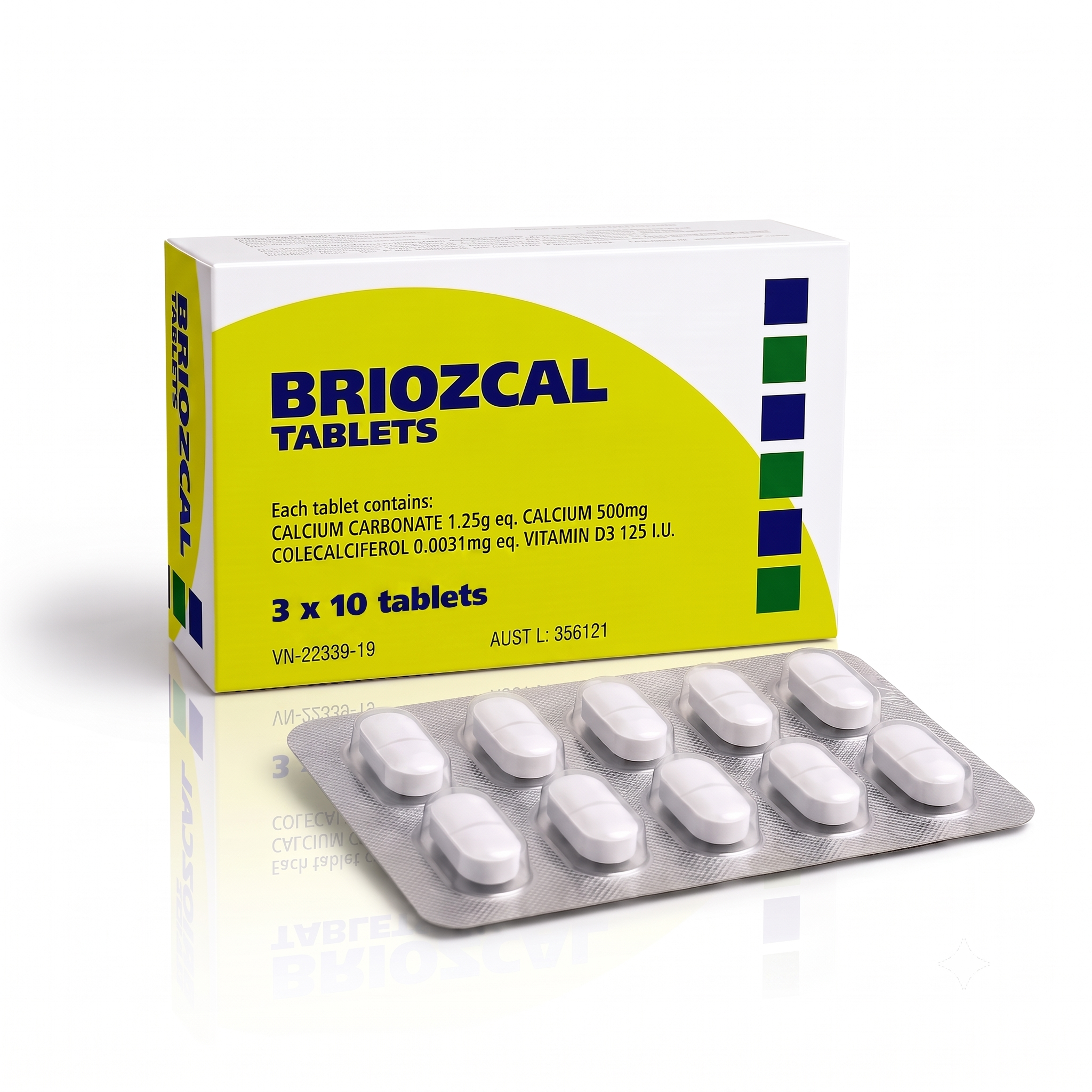
BRIOZCAL Tablets
Contains Calcium Carbonate and Vitamin D3 to strengthen bone and tissue
Calcium carbonate and Vitamin D3 film-coated tablets for bone mineralisation support. Film-coated tablets supplying calcium carbonate and Vitamin D3 for bone strength and daily calcium supplementation.
Each film-coated tablet contains:
-
Calcium Carbonate 1.25 g (equivalent to 500 mg elemental calcium), Colecalciferol 0.0031 mg (equivalent to Vitamin D3 125 IU)
-
Excipients: Crospovidone, Carnauba wax, Magnesium stearate, Microcrystalline Cellulose, Hypromellose, Titanium dioxide, Macrogol 400, and Maize Starch.
Therapeutic Indications
Briozcal: Source of calcium. A calcium supplement formulated to strengthen bone and tissue in growing and mature users:
- Prevention and treatment for osteoporosis of women, the elderly, smokers, the alcohol addicted and people with high risk : such as using corticoid for long time, after being injured or after a long time motionless in bed
- Treatment for rickety disease, osteomalacia, bones loss, Sheuemann.
- Supplement calcium, vitamin D daily for the growing of bone, teeth system in children, teenager, puberty.
- Supplement calcium for pregnant women, lactating women, prevent complications due to the acute and chronic lack of calcium
- For the demand of supplement calcium in case of lacking of it due to the diet, bone breaking treatment and other diseases ( eye diseases, allergic …. )
Posology and method of administration
- Children : Not recommended for children under 18 years unless their doctors suggest it
- Calcium supplement and prevention for osteoporosis : Adults take 1 or two tablets daily swallowed with glass of water after a meal or as directed by your healthcare professional.
- Treatment for osteomalacia: as directed by your healthcare professional. Recommended dosage 2 tablets daily on ten days
- Patients with hepatic impairment and elderly : No dosage adjustment is required
- Patients with renal impairment and kidney stones: No dosage adjustment is required.
- In patients with mild hypercalcaemia, mild to moderate renal failure or with a history of kidney stones, urinary calcium excretion should be supervised carefully.
Contraindications
- Hypersensitivity to any of the tablet ingredients
- Hypercalcaemia, severe hypercalciuria. kidney stones, severe renal failure.
- Using cautiously in prolonged immobilisation with osteoporosis.
- Patients who are receiving digitalis ( increase risk of digitalis toxic effect ).
Special warnings and precautions for use
- Vitamin can be assistant if the dietary intake is inadequate.
- Patients with mild to moderate renal failure or mild hypercalciuria should be supervised carefully. In patients with a history of renal stones, urinary calcium excretion should be measured to exclude hypercalciuria.
- Special caution is required in the treatment of patients with cardiovascular disease. Strict medical supervision and If necessary, monitoring ECG and calcaemia are necessary
- Caution is also required in patients with Sarcoidosis because of possible increased metabolism of vitamin D to its active form. If there is any problem, treatment should consist of stopping all intake of calcium and vitamin D.
Interaction with other medicinal products and other form of interaction
- Certain drugs can reduce urinary calcium excretion: thiazide diuretics, clopamid. Ciprofloxacine, chlorthalidon, antispasmodics
- Calcium salts may reduce the absorption of demeclocyclin, doxycyclin, metacyclin, minocyclin, oxytetracyclin, tetracyclin. Enoxacin, fleroxacin, levofloxacin, lomefloxacin, norfloxacin, pefloxacine, iron, zinc and some other necessary minerals.
- Calcium increases cardiotoxicity of digitalis glycosides because increasing blood calcium levels will increase the inhibitory effect of Na+, K+, ATPase of cardiac glycozid.
- Glucocorticoid, phenytoin reduce calcium absorption through the gastrointestinal tract. Phytate and oxalate regimes reduce calcium absorption because they form complexes difficult to absorb
- Phosphate, Calcitonin, sodium sulfate, furosemind, magnesium, cholestyramine, estrogen, some anticonvulsants also reduce blood calcium levels
- Thiazid diuretics, on the contrary, increase blood calcium levels. The use of thiazide diuretics in people with parathyroid insufficiency that causes hypercalcemia is probably due to increased calcium release from bone
- Do not treat vitamin D simultaneously with cholestyramine or colestipol hydrochloride, because it can lead to reduced absorption of vitamin D in the intestine.
- Excessive use of mineral oil can interfere with absorption of vitamin D in the intestine.
- Concomitant therapy with vitamin D with thiazide diuretics for people with low parathyroidism can lead to increased blood calcium level. In that case, it is necessary to reduce the dose of vitamin D or stop taking vitamin D temporarily.
- Do not use vitamin D simultaneously with phenobarbital and / or phenytoin (and possibly with other drugs that induce liver enzymes) because these drugs can reduce 25 - hydroxyergocalciferol levels and 25 - hydroxy - colecalciferol in plasma and increased vitamin D metabolism into inactive substances.
- Do not use vitamin D simultaneously with corticosteroids because corticosteroids hinder the effects of vitamin D.
- Vitamin D should not be used concomitantly with cardiac glycosides because of the glycoside toxicity that supports the heart because of increased blood calcium, leading to arrhythmias.
Pregnancy and lactation
- During pregnancy and lactation, treatment with Briozcal tablets should always be under the direction of a physician
- Pregnancy : Recommended daily calcium requirement of +400 mg so the recommended dosage (1 tablet daily ) is safe. However, pregnant women should be provided with Calcium with a full diet. Taking too many vitamins and calcium and other minerals can harm mother or foetus.
- Lactation: Not harmful when taking the recommended daily dose.
Effects on ability to drive and use machine
- There are no data the effect of this product on driving capacity and use machines
Undesirable effects
- Adverse reactions are list below, by system organ class and frequency. Frequencies are defined as : uncommon ( >1/1,000 to < 1/100) rare ( .1/10,000 to <1/1,000) or very rare (<1/10,000)
- Metabolism and nutrition disorders
- Uncommon: Hypercalcaemia and hypercalciuria
- Very rare: Seen usually only in overdose, mild-alkali syndrome
- Gastrointestinal disorders
- Rare: Constipation, flatulence, nausea, abdominal pain and diarrhoea
- Very rare: dyspepsia
- Skin and subcutaneous disorders
- Rare: pruritus, rash and urticaria
- Reporting of suspected adverse reactions
- Reporting suspected adverse reactions after authorisation of the medicinal product is important. It allows continued monitoring of the benefit/risk balance of the medicinal product. Healthcare professionals are asked to report any suspected adverse reactions
Overdose
- Blood calcium levels exceed 2.6 mmol / liter (10.5 mg / 100 ml) are considered hypercalcemia. Stopping any medication that is likely to cause high blood calcium can resolve mild hypercalcaemia in patients with no clinical symptoms and normal renal function.
- When blood calcium levels exceed 2.9 mmol / liter (12 mg / 100 ml), immediately take the following measures:
- Rehydration by sodium chloride 0.9% intravenous infusion. Diuretics can be used to increase excretion of calcium but not thiazide diuretics because they increase calcium reabsorption in the kidneys.
- Monitor blood levels of potassium and magnesium and replace blood early to prevent complications.
- Monitor ECG and may use beta blockers - adrenecgic to prevent severe arrhythmias.
- Hemodialysis, Calcitonin and adrenocorticoid can use in combined treatment. Blood calcium levels at regular intervals must be monitor. In addition, medications such as Calcitonin, bisphosphonate and plicamycin may be used if the above measures are not effective.
- Possible interactions may occur with food ( e.g. foods containing phosphate, oxalic or phytinic acid) with a reduction of calcium absorption
Pharmacodynamic properties
- ATC code: A12AX
- Calcium is the basic element constitute the bone. Vitamin D to assist in the calcium absorption.
- Calcium: Calcium (Ca2+) plays a pivotal role in the physiology and biochemistry of organisms and the cell. It plays an important role in signal transduction pathways, where it acts as a second messenger, in neurotransmitter release from neurons, contraction of all muscle cell types, and fertilization. Many enzymes require calcium ions as a cofactor, those of the blood-clotting cascade being notable examples. Extracellular calcium is also important for maintaining the potential difference across excitable cell membranes, as well as proper bone formation.
- Vitamin D3 ( colecalciferol) is one of the substances of the vitamin D group, including sterol-containing compounds of similar structure to prevent and treat rickets disease.
- Vitamin D3, parathyroid hormone and Calcitonin regulate serum calcium levels. The main function of vitamin D is to maintain normal levels of calcium and phosphorus in the plasma by increasing absorbing minerals from the diet in small intestine and increasing the transfer of calcium and phosphorus from the bones into the blood.
Pharmacokinetic properties
- Absorption of calcium in the intestine is inversely proportional to the amount of calcium ingested, so when a diet low in Calcium will lead to increased absorption, partly due to the effect of vitamin D.
- After oral administration, Calcium carbonate is converted into Calcium chloride due to the effect of acid in the stomach. Absorption through the gastrointestinal tract about 30% in the small intestine.
- 99% of the calcium in the body is concentrated in the structure of bones and teeth. The remaining 1% is in the extracellular and extracellular fluids. About 50% of the total calcium in the blood in ionized form is physiologically active and about 10% is combined with citrate, phosphate or other anions, the remaining 40% is bound to proteins, mainly albumin.
- After use, the amount of calcium ion excreted in the urine is the filtered amount in the glomerulus and the amount is reabsorbed. Renal tubular reabsorption is very effective because of more than 98% of calcium ion filtration through the glomerulus reabsorbed into the blood. The effect of reabsorption is stimulated by parathormone, N? and diuretics. Diuretic effects at the upstream branch of Henle straps increase urinary calcium. In contrast, only thiazide diuretics are not associated with Na + and Ca + 2 excretion, leading to decreased calciumuria. Parathyroid hormone always regulates blood calcium levels by acting on the renal tubules. Urinary calcium is only slightly affected by the Calcium diet in normal people.
- Calcium is excreted in the faeces, urine and sweat, approximately 2/3 of the filtered calcium is reabsorbed.
- During breastfeeding, part of the calcium pass into breast milk
Vitamin D
- Absorption: Vitamin D3 is absorbed in the small intestine. Bile is required for absorption of vitamin D in the intestine. Because lipid-soluble vitamin D should be concentrated in the micro-nutrient microflora, it is absorbed by the lymphatic system.
- Colecalciferol and its metabolite circulate in the blood associated with a specific globulin. Colecalciferol is converted in the liver by hydroxylation to 25-hydroxycolecalciferol activated form. In fact, 25-hydroxycolecalciferol has a higher affinity to protein than the parent compound. In the kidney, it is then converted to form 1.25 hydroxycolecalciferol. 1.25 hydroxycolecalciferol is a metabolite that increases calcium absorption. Non-metabolizable vitamin D is stored in adipose tissue and muscle tissue.
- Half-life of vitamin D: 19-25 hours.
- Vitamin D and its metabolites are excreted primarily through bile and feces, only a small amount appears in the urine. Some types of vitamin D can be released into breast milk.
Pre-clinical safety data
- There is further no information of relevance to the safety assessment in addition to what is stated in other parts of the SmPC
Incompatibilities
- Not applicable, oral preparation
Shelf life
- 36 months from date of manufacture
Special precautions for storage
- Do not store above 300C
Marketing authorisation number
Marketing authorisation holder
Suite106/10 Edgeworth David Avenue, Hornsby NSW 2077, Australia
Same Category
Related Products
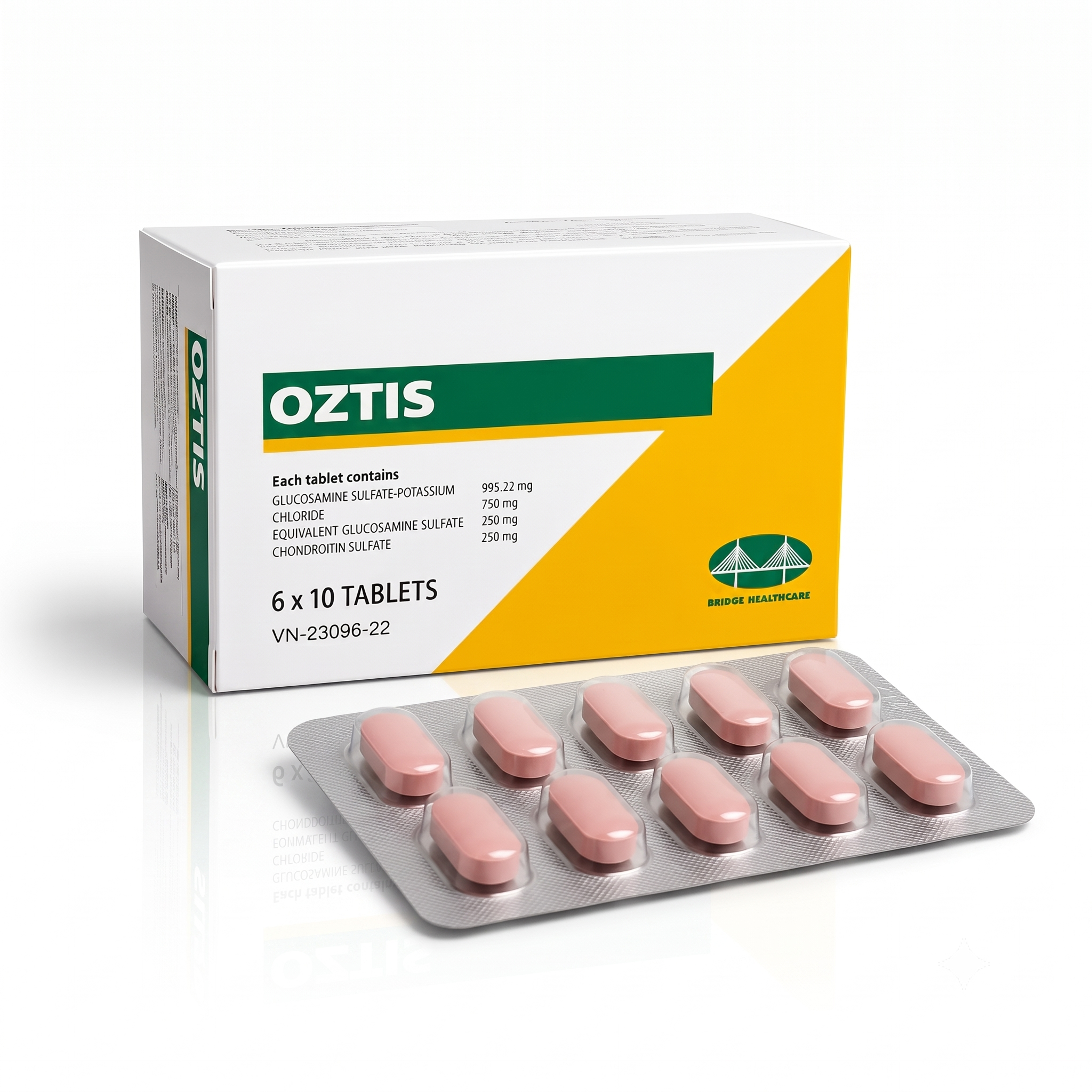
OZTIS
A combination of Glucosamine Sulfate and Chondroitin Sulfate to help maintain healthy connective tissue and mobile joint function.
Box of 6 x 10 film coated tablets
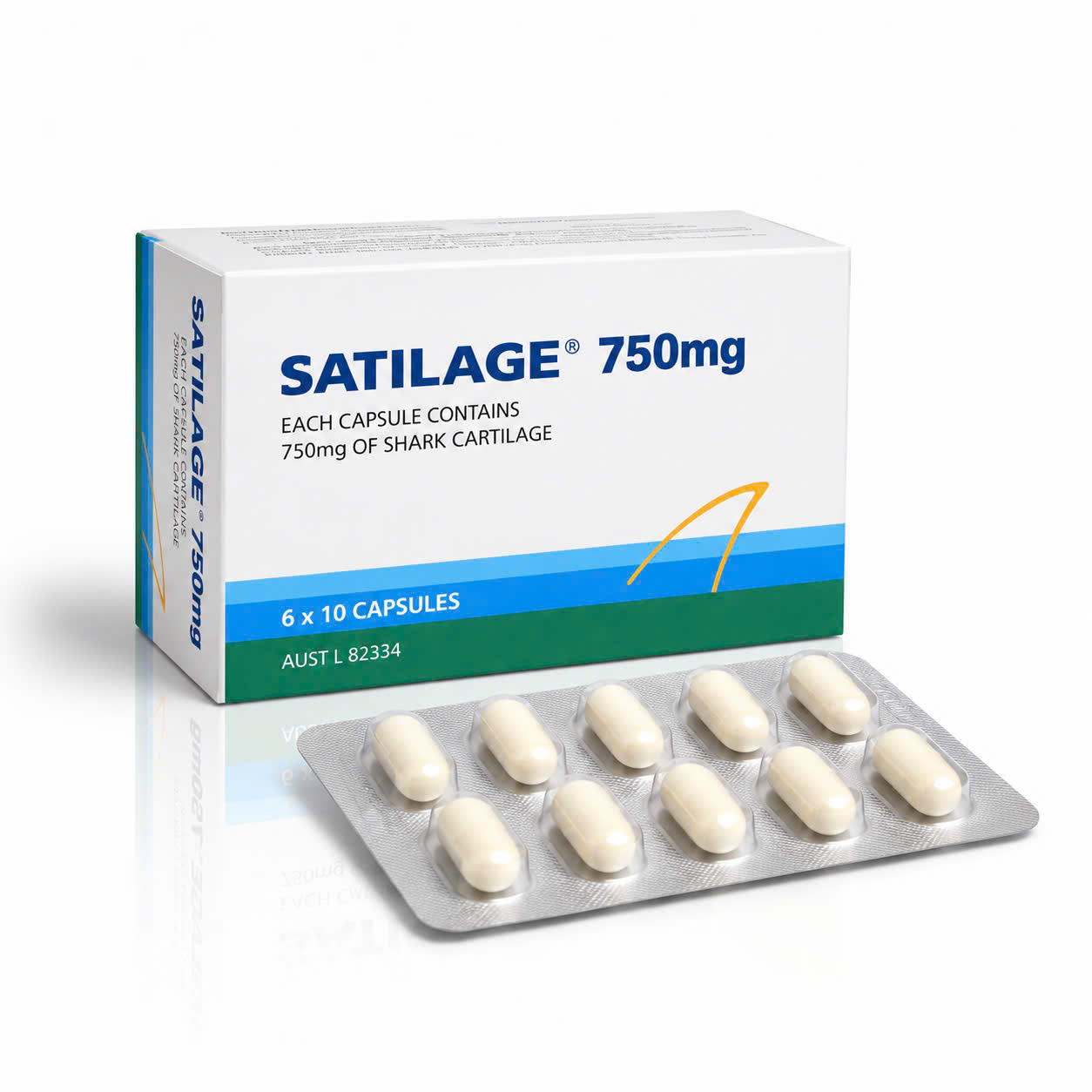
SATILAGE 750mg
Contains Shark Cartilages - Temporary relief of the pain of Osteoarthritis and Arthritis
Box of 6 x 10 film coated tablets
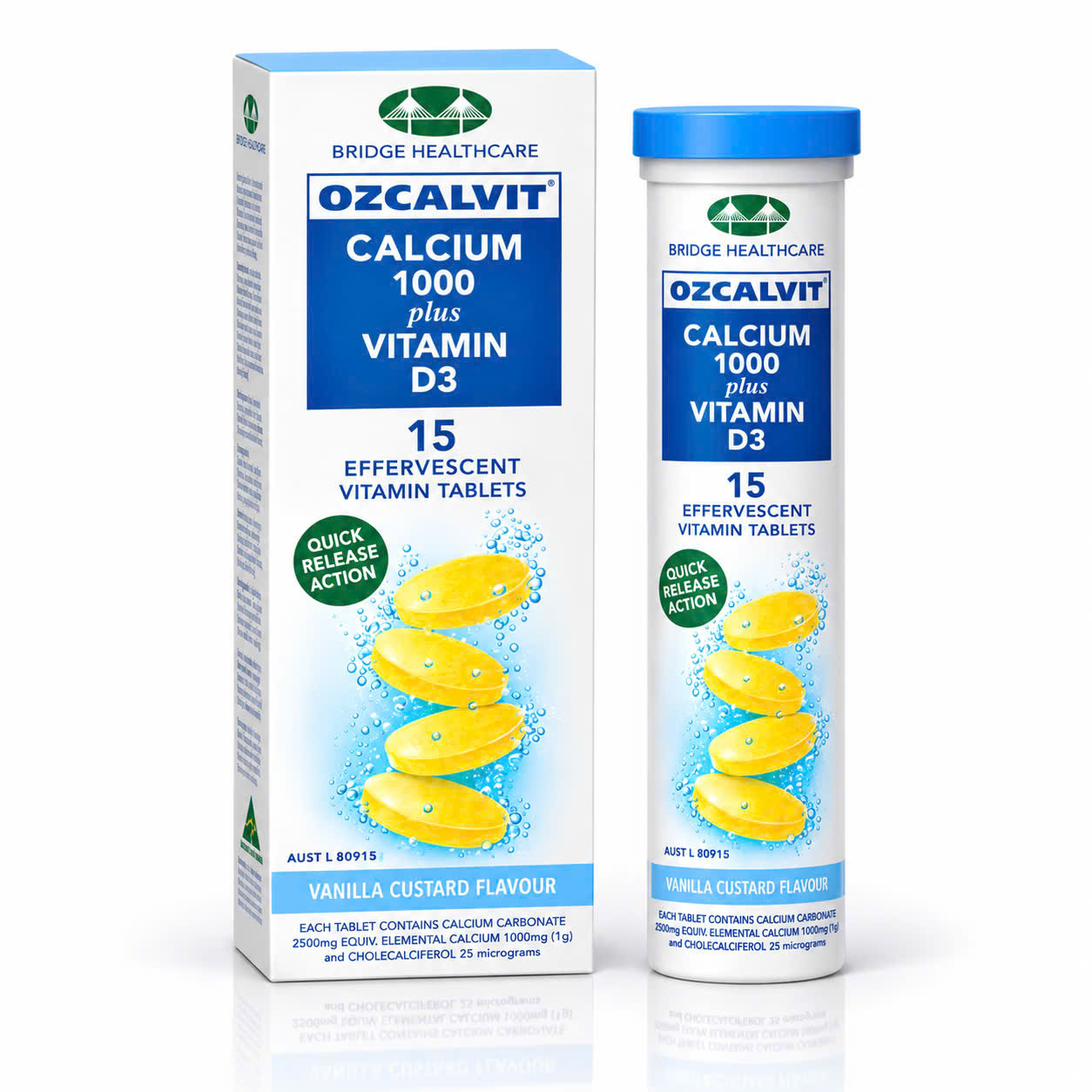
OZCALVIT 1000mg
Contains Calcium Carbonate and Vitamin D3 to strengthen bone and tissue
Tube of 15 effervescent tablets