
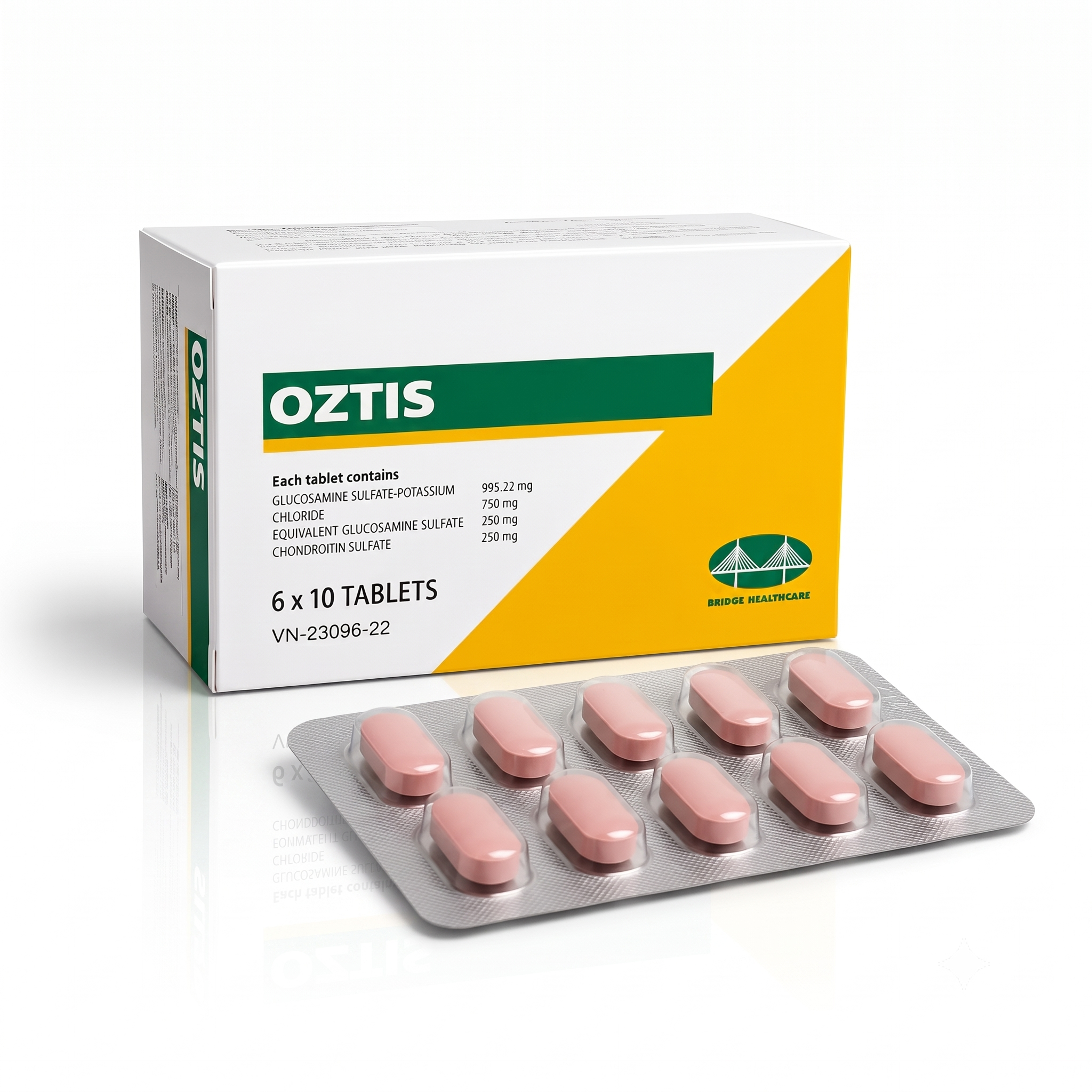
OZTIS
A combination of Glucosamine Sulfate and Chondroitin Sulfate to help maintain healthy connective tissue and mobile joint function.
Taken consistently it promotes the nourishment of cartilage and encourages joint elasticity.
Each tablet contains:
- Glucosamine sulfate-potassium chloride complex 995.22 mg (equivalent to Glucosamine sulfate 750 mg)
- Chondroitin sulfate - bovine 250 mg
- Excipients: Hypromellose, Carnauba wax, Microcrystalline Cellulose, Sodium Croscarmelos, Titanium dioxide, Magnesium stearate, Red iron oxide, Calcium hydrogen phosphate dihydrate, Macrogol 400
Posology and method of administration
- Oztis should not be used in children and adolescents below the age of 18 due to lack of data on safety and efficacy
- For people over 18 years: take 2 times daily, 1 tablet at a time or as directed by a doctor. The duration of taking the drug depends on the individual, at least for 2-3 consecutive months to ensure treatment results
- Method of administration : Tablets can be taken with or without food. The tablets must be swallowed ( not chewed ) with water
Contraindications
- Hypersensitivity to the active substances or to any of the excipients
- Oztis must not be given to patients who are allergic to shellfish as the active substance is obtained from shellfish
Special warnings and precautions for use
- No need to adjust the dose for elderly. In patients with impaired renal and/or liver function no dose recommendations can be given since no studies have been performed. Do cautions when used for people with severe hepatic impairment and/or severe renal impairment. If symptoms do not improve, consult your doctor.
- Glucosamine may increase resistance to insulin. In normal healthy animals and diabetic animals taking glucosamine increases insulin resistance. In these animals, intravenous glucosamine significantly reduces the level of glucose absorption in skeletal muscle. In animals taking glucosamine by oral, this effect is not seen. Patients with type 2 diabetes or those with excess weight and problems with glucose tolerance need to monitor of blood sugar carefully if they take glucosamine supplements.
Interaction with other medicinal products and other forms of interaction
- Glucosamine may increase insulin resistance and therefore affect glucose tolerance. Diabetic patients taking glucosamine as directed by a doctor need to monitor their blood sugar levels and may need to adjust the dose of blood sugar control medications they are taking. Follow the instructions of the physician. Heparin may increase the risk of bleeding.
- There is no other interaction with known medicines, nutritional supplements, foods or herbs.
Pregnancy and lactation
- Pregnancy : Not recommended for pregnant women because there is no relevant data
- Breastfeeding: There is insufficient data on the excretion of Glucosamine into breast milk. For safety of babies, it is recommended not to use on breast-feed women
Effects on ability to drive and use machines
- Oztis has no influence on the ability to drive and use machines. If dizziness or drowsiness is experienced, car driving and the operating of machinery is not recommended
Undesirable effects
The adverse reactions are classified according to frequency of observation:
Adverse reactions are grouped by system organ class:
- Very common: ≥ 1/10, Common ≥ 1/100, No Common ≥ 1 / 1,000 - ≤1 / 100 Rare: ≥ 10,000 - <1 / 1,000,
- Very rare <1 / 10,000 , unknown ( cannot be estimated on statistics)
Adverse reactions are grouped by system organ class:
- Common ≥ 1/100: as nervous system disorders (headache, fatigue), digestive disorders (abdominal pain, vomiting, diarrhea or constipation )
- Uncommon ≥ 1 / 1,000 - ≤1 / 100: skin disorders (redness, itching)
- Unknown: allergy, insomnia, dizziness, asthma, vomiting, jaundice.
Overdose
- There have been no case of overdose with Glucosamine sulfate and Chondroitin reported
- Symptoms of overdose may include: headache, dizziness, vomiting, joint pain, diarrhea or constipation. If overdose occurs, it is necessary to discontinue the drug and use electrolyte balance
Pharmacodynamic properties
ATC code: M01BX
Glucosamine and Chondroitin are known as chondroprotective agents. Chondroprotective agents are natural compounds the body produce to rebuild damaged cartilage and promote healthy joint function. Chondroitive agents work by supporting and enhancing anabolic chondrocyte synthesis ( the building of cartilage cells) and maintaining joint fluid levels to promote lubrication. In addition, Glucosamine and Chondroitin combat harmful free radical enzymes and autoimmune processes that damage joint cartilage, as well as help eliminate blockages in blood vessels that lead to the joint
Glucosamine sulfate
Glucosamine and Chondroitin are known as chondroprotective agents. Chondroprotective agents are natural compounds the body produce to rebuild damaged cartilage and promote healthy joint function. Chondroitive agents work by supporting and enhancing anabolic chondrocyte synthesis ( the building of cartilage cells) and maintaining joint fluid levels to promote lubrication. In addition, Glucosamine and Chondroitin combat harmful free radical enzymes and autoimmune processes that damage joint cartilage, as well as help eliminate blockages in blood vessels that lead to the joint
Glucosamine sulfate
- Glucosamine is a component of polysaccharides, glycosaminoglycans and glycosphingolipids, which form the structure of all living cells. In addition, glycosaminoglycans are the basic substance to create articular cartilage, synovial fluid, spinal disc, lung tissue, small intestinal cell and mucosa wall.
- Glucosamine sulfate has many different mechanisms of action. It inhibits the degeneration of proteoglycans (the structural structure of articular cartilage), helps repair joint damage caused by experiments, has the effect of protecting cartilage cells and fighting arthritis. It has a very mild anti-inflammatory and anti-edema effect. Clinically, Glucosamine sulfate is used to treat osteoarthritis and anti-osteoarthritis. Glucosamine sulfate helps maintain connective tissue and healthy joint functions. Regular use helps to nourish cartilage and enhance joint elasticity.
- Chondroitin sulfate is one of the main elements of the cartilage which joins a central protein, forming what we know as proteoglycan, which is what gives the cartilage its mechanical and elastic properties. It is an important material in the regeneration of cartilage and bone tissue. Effective to prevent cell degeneration. Maintain the elasticity of structures with multiple fibers such as tendons, muscle scales, ligaments. Chondroitin inhibits elastase, a mediator in cartilage degeneration, and activates proteoglycan synthesis by cartilage cells.
Pharmacokinetic properties
Glucosamine sulfate
- Glucosamine is almost exclusively absorbed (90-98%) by oral administration
- Glucosamine binds plasma α and bul-globuline immediately after 20 minutes, reaching peak blood levels from 8-10 hours, then gradually decreasing with a half-life of about 2.9 days. Articular cartilage and some other tissues actively absorb glucosamine while most other tissues are passive diffusion.
- The clearance of radioactive activity when taking glucosamine sulfate radioactively marked mainly via the lung (50%) in the form of carbon dioxide, kidney (35%) in the form of glucosamine and faeces (2%) .
- The bioavailability of chondroitin sulfate fluctuates between 15 and 24% of the dose by oral administration. Maximum blood levels are reached in about 4 hours
- In the blood. 85% of the concentration of chondroitin sulfate and the depolymerase derivatives is bound to plasma proteins. The volume of distribution of chondroitin sulfate is relatively small, around 0,3 l/kg. In humans, chondroitin sulfate shows an affinity for joint tissue.
- At least 90% of the dose of chondroitin sulfate is metabolized firstly by lysosomal sulfatases, and then is depolymerased by hyaluronidases, beta-glucoronidases and beta-N-acetyl hexosaminidases. The liver, the kidneys and other organs take part in the depolymerisation of chondroitin sulfate.
- The system clearance of chondroitin sulfate is 30,5 ml/min or 0,43 ml/min/kg. The average life time fluctuates between 5 and 15 hours, depending on the experimental protocol. Elimination of chondroitin sulfate and its depolymerased derivatives is chiefly through the kidneys.
Pre-clinical safety data
- Animal experimental data relating to toxicity during repeated administration, reproduction toxicity, mutagenicity and carcinogenicity is lacking for Glucosamine sulfate and chondroitin sulfate
Incompatibilities
- Careful use for people with history of asthma: glucosamine is reported to be more severe than asthma attacks
Shelf life
- 36 months from date of manufacture
Special precautions for disposal of a used medicinal product or waste materials derived from such medicinal product and other handling of the product
- No special requirements
Special precautions for storage
Below 300C in dry place, prevent direct sunlight.
Keep out of reach of children.
Do not use medicine beyond the expiry date indicated on the label or when the packaging is damaged.
Keep out of reach of children.
Do not use medicine beyond the expiry date indicated on the label or when the packaging is damaged.
Marketing authorisation number
AUST L 356284
Marketing authorisation holder
BRIDGE HEALTHCARE PTY.LTD
Suite106/10 Edgeworth David Avenue, Hornsby NSW 2077, Australia
Suite106/10 Edgeworth David Avenue, Hornsby NSW 2077, Australia
Same Category
Related Products
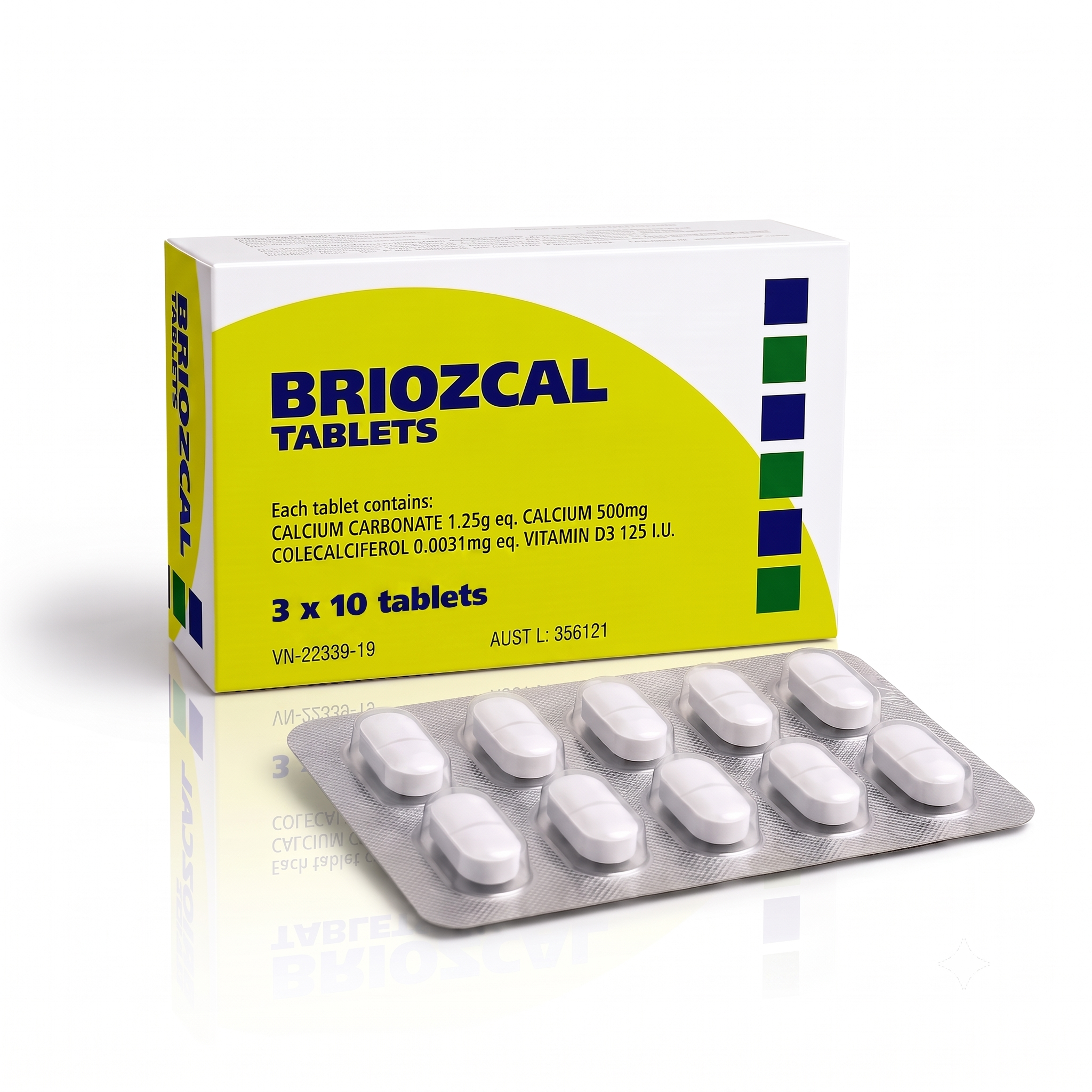
BRIOZCAL Tablets
Contains Calcium Carbonate and Vitamin D3 to strengthen bone and tissue
Box of 3 x 10 film coated tablets
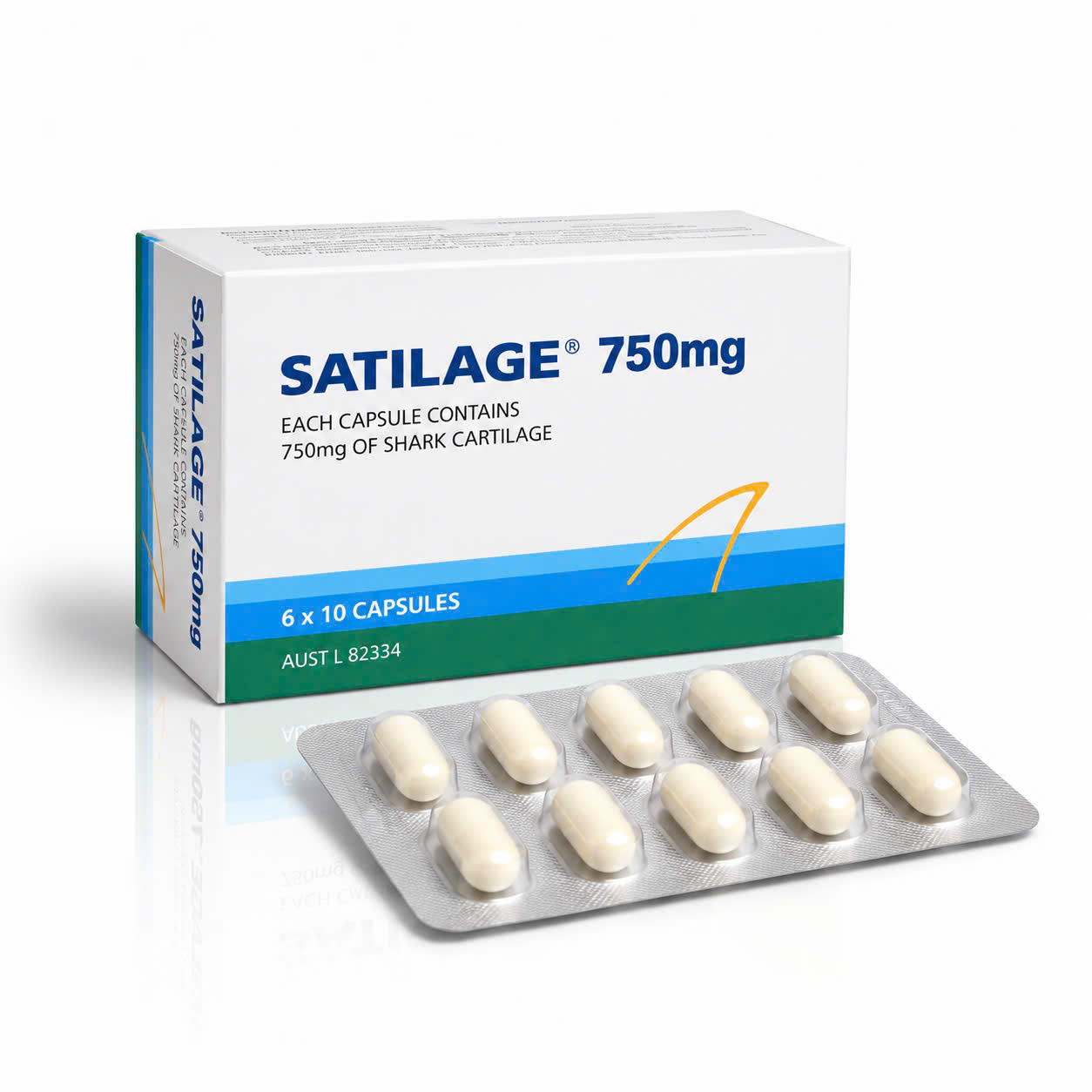
SATILAGE 750mg
Contains Shark Cartilages - Temporary relief of the pain of Osteoarthritis and Arthritis
Box of 6 x 10 film coated tablets
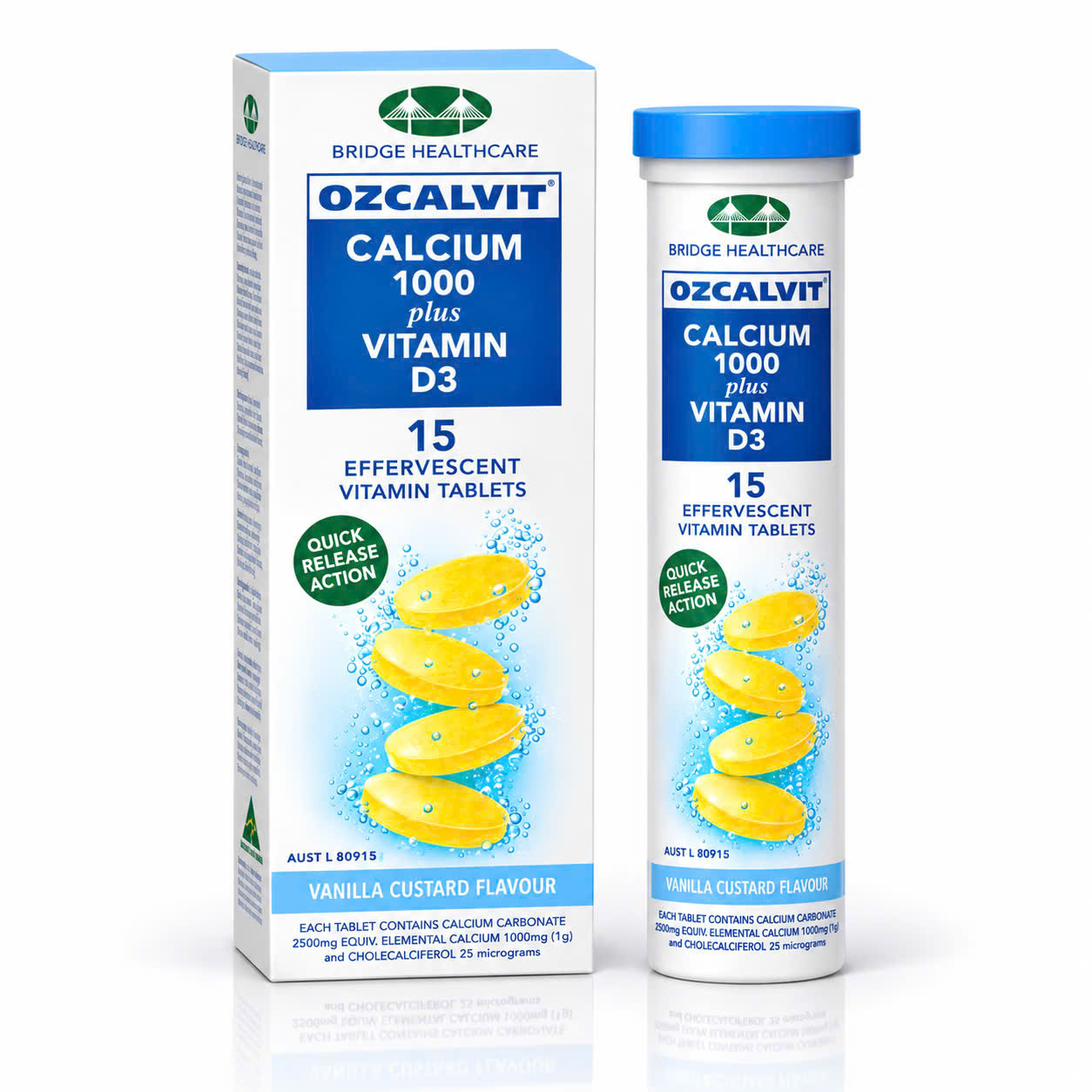
OZCALVIT 1000mg
Contains Calcium Carbonate and Vitamin D3 to strengthen bone and tissue
Tube of 15 effervescent tablets