
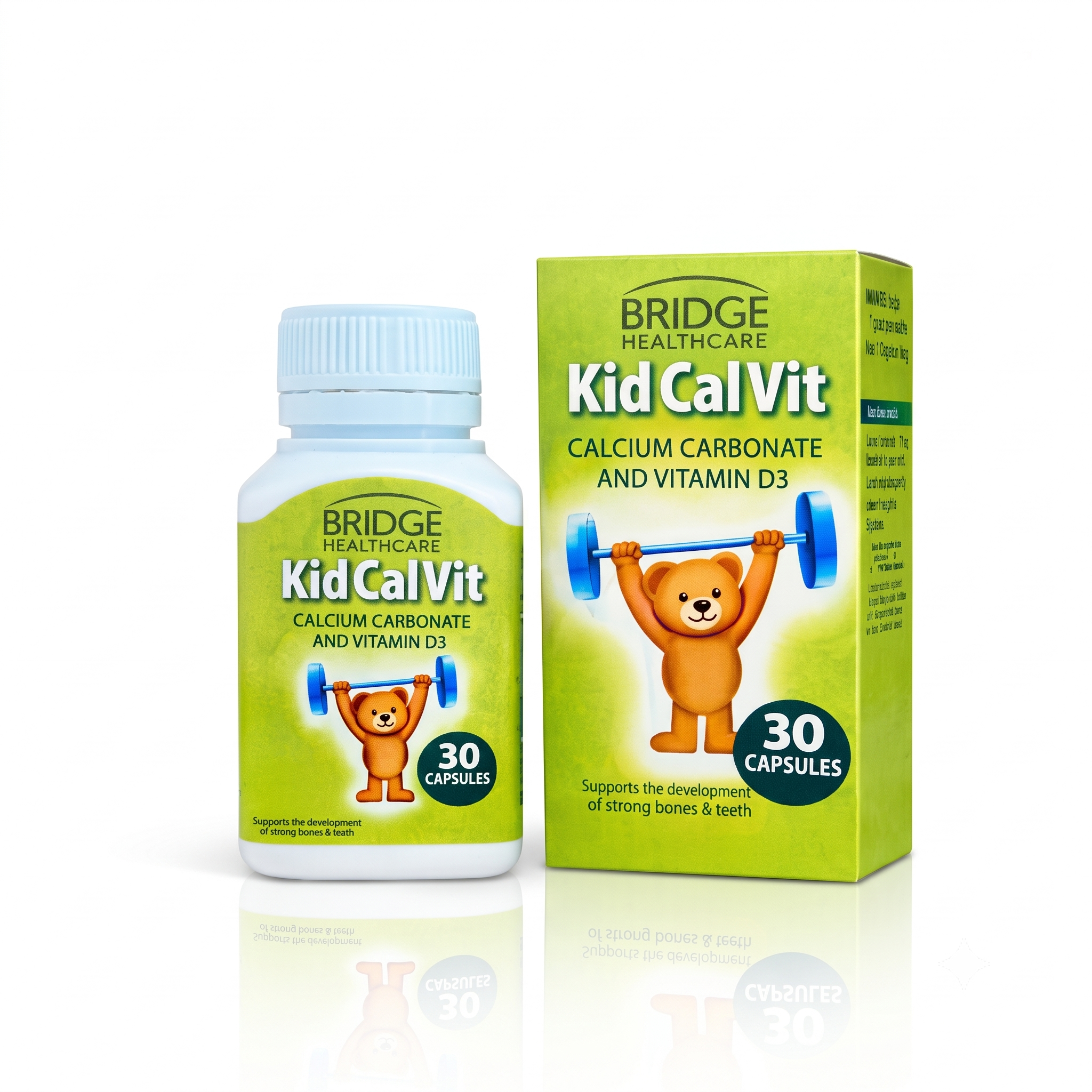
KIDCALVIT
Provide children three years and older with the benefits of both Calcium and Vitamin D3
Each capsule contains :
- Calcium carbonate: 250 mg (equivalent to 100 mg of element calcium)
- Colecalciferol: 3.75 mcg ( equivalent to 150 I.U. vitamin D3)
- Excipients: Glycerol, hydrogenated vegetable oil, iron oxide black, lecithin, soya oil, sucralose, titanium dioxide, trusil natural strawberry flavor , trusil natural vanilla flavor
Therapeutic indications
Source of calcium. As a supplement especially formulated to provide children three year and older with the benefits of both calcium and vitamne D3
Posology and method of administration
- Children above 3 years of age: take 1-2 chewable capsules per day after meal, depending on daily calcium requirement
- Method of administration : Oral or chew. For chewing, when the capsule breaks, the aroma and sweetness of the strawberry will taste. The capsule shell is sweet and edible.
- Not recommended for children under 3 years
Contraindications
KidCalvit should not be used if
- Hypersensitivity to the active substances ( calci, vitamin D) or to any of the excipients
- Increased blood calcium or vitamin D toxicity
Special warnings and precautions for use
Caution is required in patients with :
- Hypercalcaemia and hypercalciuria
- There is kidney disease like renal stones
- Using other drugs containing calcium
- Do not use once with thyroxine, bisphosphonates, drugs containing iron or fluorine, tetracycline, quinolone. Take these medicines about 4 hours before using KidCalvit.
- Patients with mild to moderate renal failure or mild hypercalciuria should be supervised carefully including periodic checks of plasma calcium levels and urinary calcium excretion
Interaction with other medicinal products and other forms of interaction
- The following drugs inhibit renal excretion of calcium: thiazides, clopamides, ciprofloxacine, chlorthalidon, anticonvulsants.
- Calcium reduces the absorption of demeclocyclin, doxycyclin, metacyclin, minocyclin, oxytetracyclin, tetracyclin, enoxacin, fleroxacin, levofloxacin, lomefloxacin, norfloxacin, ofloxacin, pefloxacin, iron, zinc and other essential minerals.
- Calcium increases cardiotoxicity of digitalis glycosides because increasing blood calcium levels will increase inhibition of Na? - K+ - cardiac glycozid ATPase.
- Glucocorticoid, phenytoin reduce the absorption of calcium through the gastrointestinal tract. Diets with phytate and oxalate reduce calcium absorption because they form complexes that are difficult to absorb.
- Phosphate, calcitonin, sodium sulfate, furosemide, magnesium, cholestyramine, estrogen, some anticonvulsants also reduce blood calcium.
- Thiazide diuretics, in contrast, increase blood calcium levels.
Pregnancy and lactation
- Pregnancy : Kidcalvit can be used during pregnancy in case of calcium and vitamin D deficiency. The intake should not exceed recommended dosage
- Lactation: Kidcalvit can be used during breast-feeding. Vitamin D3 and its metabolites pass into breast milk
Effects on ability to drive and use machines
- Kidcalvit has no known influence on the ability to drive and use machines.
Undesirable effects
The adverse reactions are classified according to frequency of observation:
- Very common: ≥ 1/10, Common ≥ 1/100, No Common ≥ 1 / 1,000 - ≤1 / 100 Rare: ≥ 10,000 - <1 / 1,000, Very rare <1 / 10,000 , unknown ( cannot be estimated on statistics)
- Immune system disorders
- Not known: hypersensitively reactions such as angio-oedema or laryngeal
- Gastrointestinal disorders
- Rare: Constipation. Dyspepsia, flatulence, nausea, abdominal pain and diarrhea
- Skin and subcutaneous disorders
- Rare: pruritus, rash and urticaria
Overdose
Symptoms :
- Overdose can lead to hypercalcaemia and hypervitaminosis D. Symptoms of hypercalcaemia may include constipation, thirst, anorexia, , nausea, vomiting, abdominal pain, muscle weakness, fatigue, mental disturbances.
- If overdose occurs, the treatment with calcium must be discontinued. Treatment: rehydration. According to severity of hypercalcaemia, isolated or combined treatment with loop diuretics, bisphosphonates, calcitonin and corticosteroids should be considered. Serum electrolytes, renal function and diuresis must be monitored. In severe cases, ECG, CVP should be followed
Pharmacodynamic properties
Calcium, combinations with vitamin D.
ACT code A12AX
Calcium is the basic element constitute the bone. Vitamin D to assist in the calcium absorption.
ACT code A12AX
Calcium is the basic element constitute the bone. Vitamin D to assist in the calcium absorption.
- Calcium: oral form used to treat calcium deficiency and hypocalcaemia. Calcium supplementation is also part of preventing the body from reducing the risk of osteoporosis. Calcium deficiency occurs when the daily diet does not provide enough calcium, usually in the elderly, women before and after menopause. Hypocalcaemia occurs in cases of hypoparathyroidism, osteomalacia, rickets, chronic renal failure, due to seizure medications or vitamin D deficiency.
- Calcium plays a vital role in the anatomy, physiology and biochemistry of organisms and of the cell, particularly in signal transduction pathways. More than 500 human proteins are known to bind or transport calcium. The skeleton acts as a major mineral storage site for the element and releases Ca2+ ions into the bloodstream under controlled conditions. Circulating calcium is either in the free, ionized form or bound to blood proteins such as serum albumin. Parathyroid hormone (secreted from the parathyroid gland) regulates the resorption of Ca2+ from bone. Calcitonin stimulates incorporation of calcium in bone, although this process is largely independent of calcitonin. Although calcium flow to and from the bone is neutral, about 5 mmol is turned over a day. Bone serves as an important storage point for calcium, as it contains 99% of the total body calcium. Low calcium intake may also be a risk factor in the development of osteoporosis. The best-absorbed form of calcium from a pill is a calcium salt like carbonate or phosphate.
- Vitamin D3 ( colecalciferol) is one of the substances of the vitamin D group, including sterol-containing compounds of similar structure to prevent and treat rickety disease Vitamin D3, parathyroid hormone and Calcitonin regulate serum calcium levels. The main function of vitamin D is to maintain normal levels of calcium and phosphorus in the plasma by increasing absorbing minerals from the diet in small intestine and increasing the transfer of calcium and phosphorus from the bones into the blood.
- Vitamin D deficiency occurs when exposure to light is insufficient or when diets are deficient in vitamin D or in people with fat absorption syndrome trouble, including those with gastrointestinal disease. Some conditions of patients with renal insufficiency may also affect the metabolism of vitamin D into an active form leading to vitamin D deficiency.
- Renal osteodystrophy is often associated with chronic renal failure and is characterized by decrease to form 25 - OHD3 to 1a, 25 - (OH) 2D3 (Calcitriol). High level of phosphate causes a decrease in plasma calcium levels, leading to secondary hyperparathyroidism and on pathological, there are typical lesions of hyperparathyroidism (fibrosis), of vitamin D deficiency (osteomalacia), or a combination of both cases.
- Vitamin D deficiency leads to symptoms characterized by hypocalcaemia, hypophosphatemia, inadequate mineralization or demineralization of bones, bone pain, fractures, in adults called osteomalacia; in children, can lead to turn special bone forms are long bone deformities, called rickets.
- The vitamin D dependent bone disease is a congenital recessive gene disease in vitamin D metabolism associated with a decrease in 25 - OHD3 conversion to Calcitriol.
Pharmacokinetic properties
Calcium
- Absorption of calcium in the intestine is inversely proportional to the amount of calcium ingested, so when a diet low in Calcium will lead to increased absorption, partly due to the effect of vitamin D. After oral administration, Calcium carbonate is converted into Calcium chloride due to the effect of acid in the stomach. Absorption through the gastrointestinal tract about 30% in the small intestine.
- 99% of the calcium in the body is concentrated in the structure of bones and teeth. The remaining 1% is in the extracellular and extracellular fluids. About 50% of the total calcium in the blood in ionized form is physiologically active and about 10% is combined with citrate, phosphate or other anions, the remaining 40% is bound to proteins, mainly albumin.
- After use, the amount of calcium ion excreted in the urine is the filtered amount in the glomerulus and the amount is reabsorbed. Renal tubular reabsorption is very effective because of more than 98% of calcium ion filtration through the glomerulus reabsorbed into the blood. The effect of reabsorption is stimulated by parathormone, N? and diuretics. Diuretic effects at the upstream branch of Henle straps increase urinary calcium. In contrast, only thiazide diuretics are not associated with Na + and Ca + 2 excretion, leading to decreased calciumuria. Parathyroid hormone always regulates blood calcium levels by acting on the renal tubules. Urinary calcium is only slightly affected by the Calcium diet in normal people.
- Elimination: Calcium is excreted in the faeces, urine and sweat, approximately 2/3 of the filtered calcium is reabsorbed.
- During breastfeeding, part of the calcium pass into breast milk
- Absorption: Vitamin D3 is absorbed in the small intestine. Bile is required for absorption of vitamin D in the intestine. Because lipid-soluble vitamin D should be concentrated in the micro-nutrient microflora, it is absorbed by the lymphatic system.
- Colecalciferol and its metabolite circulate in the blood associated with a specific globulin. Colecalciferol is converted in the liver by hydroxylation to 25-hydroxycolecalciferol activated form. In fact, 25-hydroxycolecalciferol has a higher affinity to protein than the parent compound. In the kidney, it is then converted to form 1.25 hydroxycolecalciferol. 1.25 hydroxycolecalciferol is a metabolite that increases calcium absorption. Non-metabolizable vitamin D is stored in adipose tissue and muscle tissue.
- Half-life of vitamin D: 19-25 hours.
- Elimination: Vitamin D and its metabolites are excreted primarily through bile and feces, only a small amount appears in the urine. Some types of vitamin D can be released into breast milk.
Pre-clinical safety data
- There is further no information of relevance to the safety assessment in addition to what is stated in other parts of the SmPC.
Incompatibilities
- Not applicable
Shelf life
- 36 months from date of manufacture.
Nature and contents of container
- Bottle of 30 or 60 tablets with a Vietnamese patient information leaflet. Made in Australia
Special precautions for disposal of a used medicinal product or waste materials derived from such medicinal product and other handling of the product
- No special requirements
Special precautions for Storage
Below 30ºC. in dry place, prevent direct sunlight. Keep out of reach of children. Do not use medicine beyond the expiry date indicated on the label or when the packaging is damaged.
Marketing authorisation number
AUST L 215492
Marketing authorisation holder
BRIDGE HEALTHCARE PTY.LTD
Suite106/10 Edgeworth David Avenue, Hornsby NSW 2077, Australia
Suite106/10 Edgeworth David Avenue, Hornsby NSW 2077, Australia
Same Category
Related Products

BRAINY KIDS
Omega-3 nutrients plus vitamins to assist healthy brain function helping to improve reading, spelling and behaviors
Bottle of 60 chewable capsules
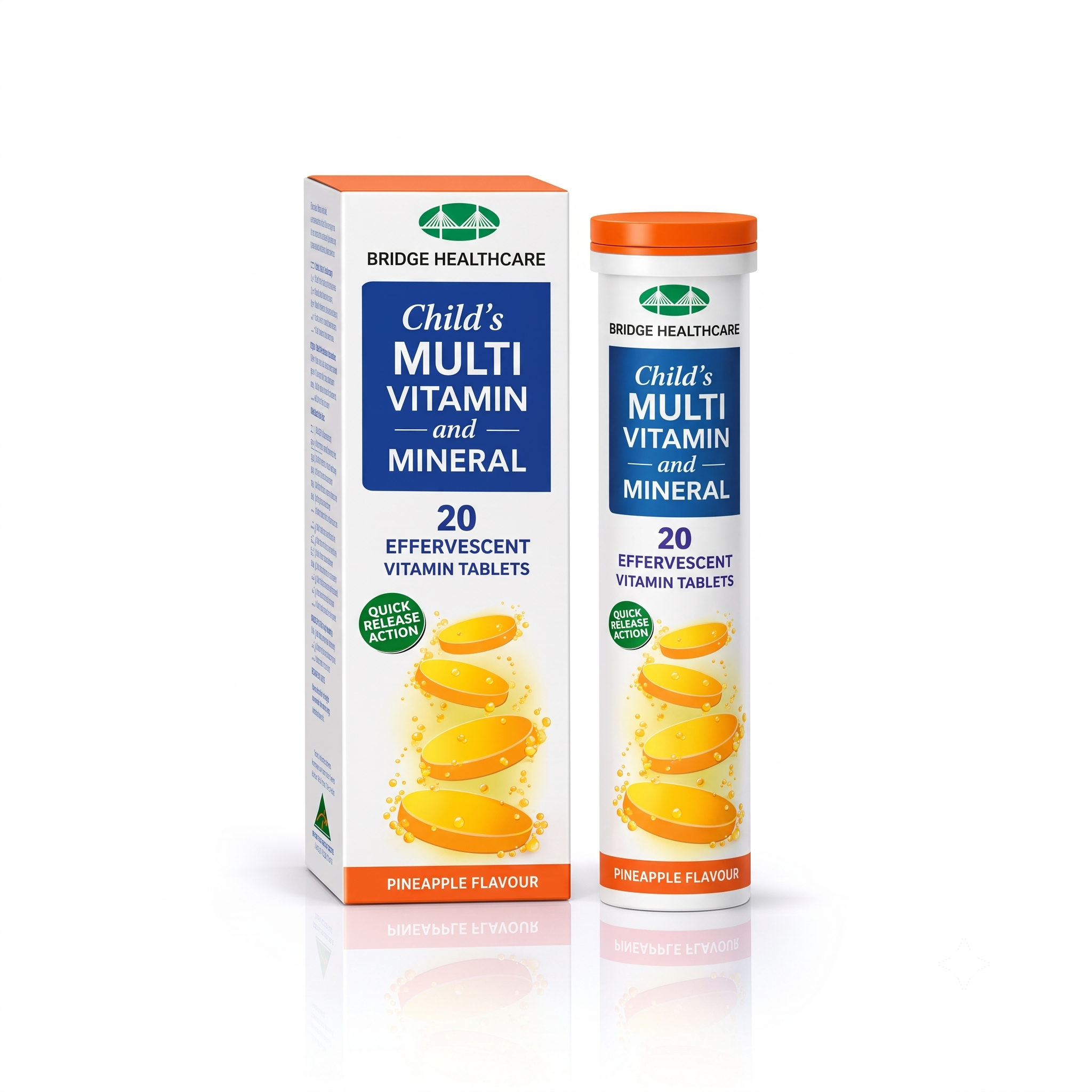
CHILD'S MULTI VITAMIN AND MINERAL
Vitamin and mineral supplements, extra Vitamin C for children. As a therapeutic nutritional adjunct in conditions where the absorption of vitamins and minerals is suboptimal
Tube of 20 effervescent vitamin tablets