
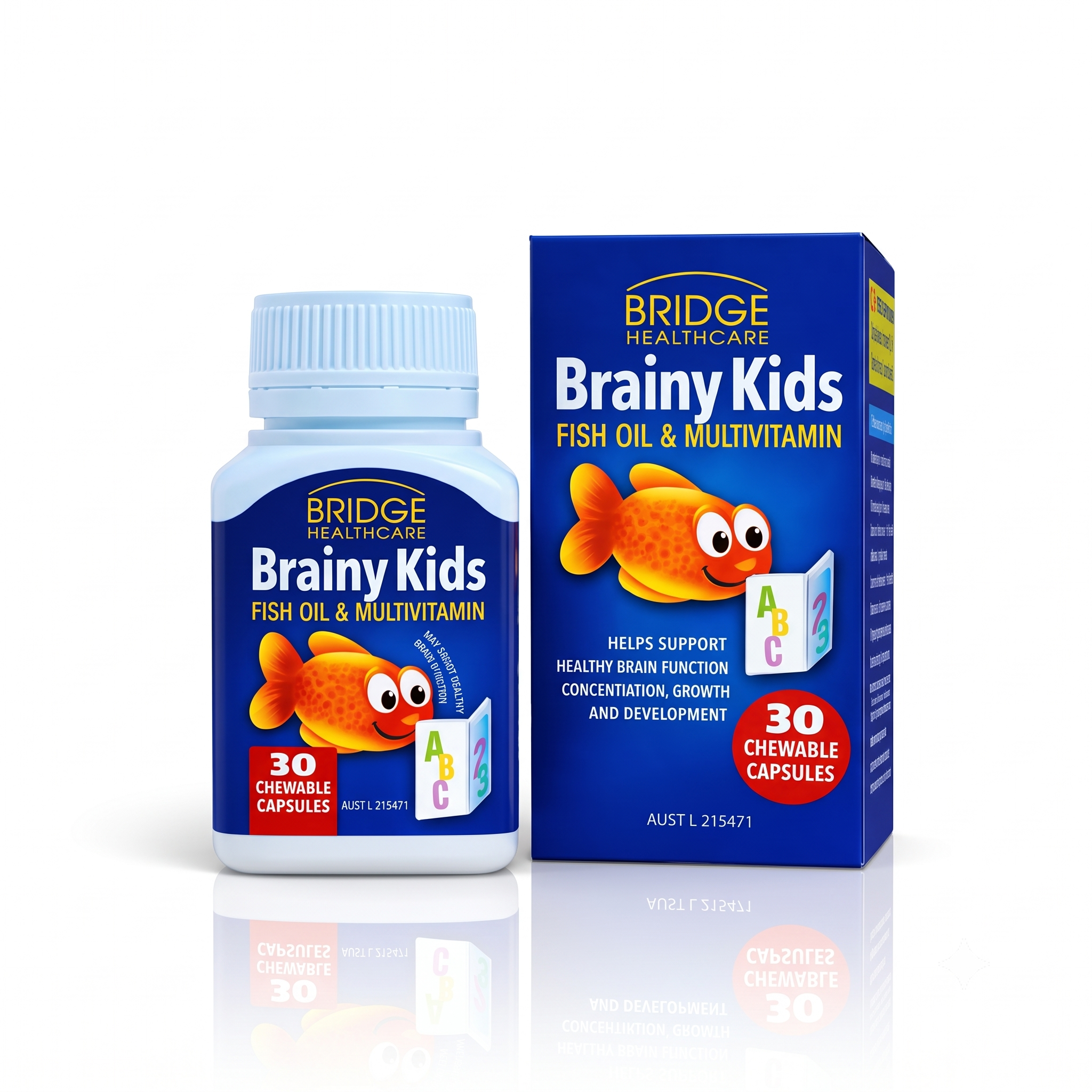
BRAINY KIDS
Omega-3 nutrients plus vitamins to assist healthy brain function helping to improve reading, spelling and behaviors
Brainy Kids capsules is great tasting with blackcurrant flavour, provide all the necessary fish oil ingredients, and are "brain food" for children.
Composition
Active ingredients
Each capsule contains:
Riboflavin (Vitamin B2) : 1.75 mg
Thiamine Nitrate (Vitamin B1) : 750 mcg
Cyanocobalamin (Vitamin B12) : 1 mcg
Potassium Iodine : 26.2 mcg - equivalent to Iodine : 20 mcg
Concentrated omega-3 triglycerides : 300 mg include :
- Eicosapentaenoic Acid (EPA) : 90 mg
- Docosahexaenoic Acid (DHA) : 60mb
Riboflavin (Vitamin B2) : 1.75 mg
Thiamine Nitrate (Vitamin B1) : 750 mcg
Cyanocobalamin (Vitamin B12) : 1 mcg
Potassium Iodine : 26.2 mcg - equivalent to Iodine : 20 mcg
Concentrated omega-3 triglycerides : 300 mg include :
- Eicosapentaenoic Acid (EPA) : 90 mg
- Docosahexaenoic Acid (DHA) : 60mb
Excipient ingredients
Yellow Beeswax, Vegetable oil- hydrogenated, Soya oil, Lecithin, Orange oil, D-alpha Tocopherol, Sucralose, Frusil concentrated blackcurrant juice powder, Trusil natural blackcurrant flavor
BRAINY KIDS with a specially formulated to provides the vital Omega-3 fish-oil nutrients with high levels of DHA and EPA, and also gives basic B vitamins such as vitamin B1, vitamin B12, vitamin B2 as well as iodine.
There have been many studies proving that omega 3 fish oil can help improve children's memory, learning ability and behavior. B vitamins and Iodine are essential substances for function, physical and intellectual development.
BRAINY KIDS is necessary for children because:
Omega -3 fish oil deficiency may cause problems with learning, memory and behavior.
Omega-3 fish oil may promotes healthy brain function and can helps improve children's reading, spelling and behavior skills, and may also help improve attension and self-control.
There have been many studies proving that omega 3 fish oil can help improve children's memory, learning ability and behavior. B vitamins and Iodine are essential substances for function, physical and intellectual development.
BRAINY KIDS is necessary for children because:
Omega -3 fish oil deficiency may cause problems with learning, memory and behavior.
Omega-3 fish oil may promotes healthy brain function and can helps improve children's reading, spelling and behavior skills, and may also help improve attension and self-control.
Dosage and usage
Dosage : Children from 3 years old: take or chew 1-2 capsules per day after eating, about 2 hours after meals. When you put the pill in your mouth and chew it, the broken pill will have the fragrant and sweet taste of blackcurrant. The medicine shell is sweet and edible
Do not use for children under 3 years old
Patients with kidney failure should consult a doctor before use
Do not use for children under 3 years old
Patients with kidney failure should consult a doctor before use
Contraindications
Hypersensitivity to Omega-3 fish oil or allergy to any ingredient of the drug.
Warnings and precautions when using the drug
Be careful using the drug in patients with a history of marine fish allergy .
Use of medicine for pregnant and lactating women
Do not use for pregnant and lactating women because of insufficient information and data.
Effects of the drug on the ability to drive and operate machinery
The drug does not affect the ability to drive and operate machinery.
Drug interactions and incompatibilities
Vitamin B6 increases the metabolism of levodapa. When using both types together, consult your doctor
Side effects
as with all medicines there can be side effects.
The frequency of adverse reactions is listed as: very common (≥ 1/10), common (≥ 1/100 to < 1/10); uncommon (≥1/1000 big < 1/100); rare(≥1/10000 to <1/1000); very rare (< 1/10,000).
. Common: digestive disorders (including abdominal pain, colic, constipation, diarrhea, dyspepsia, flatulence, erosion, gastroesophageal reflux, nausea or vomiting).
. Uncommon: hyperglycemia, gout, dizziness, decreased taste, headache, hypotension, epistaxis, gastrointestinal bleeding, rash
. Rare: hypersensitivity, liver disorders, urticaria.
Notify medical staff of any adverse effects during use
The frequency of adverse reactions is listed as: very common (≥ 1/10), common (≥ 1/100 to < 1/10); uncommon (≥1/1000 big < 1/100); rare(≥1/10000 to <1/1000); very rare (< 1/10,000).
. Common: digestive disorders (including abdominal pain, colic, constipation, diarrhea, dyspepsia, flatulence, erosion, gastroesophageal reflux, nausea or vomiting).
. Uncommon: hyperglycemia, gout, dizziness, decreased taste, headache, hypotension, epistaxis, gastrointestinal bleeding, rash
. Rare: hypersensitivity, liver disorders, urticaria.
Notify medical staff of any adverse effects during use
Overdose and treatment
Clinical data on the use of Omega-3 in patients over 70 years of age are limited: With high doses (corresponding to about 14 tablets) there is a decrease in thromboxane A2 production . No significant effects were observed on other coagulation factors. Some studies with omega-3 acids demonstrated prolongation of bleeding time, but the bleeding times reported in these studies did not exceed normal limits and did not produce clinically significant bleeding episodes. clinical.
Omega-3 is not indicated in peripheral hypertriglyceridemia
Omega-3 is not indicated in peripheral hypertriglyceridemia
Pharmacodynamic properties
ATC code: A11 EX
B vitamins and Iode are co-enzymes necessary for the metabolism of proteins, carbohydrates or fatty acids. Iodine plays an important role in thyroid iodine metabolism
Omega-3 is abundant in brain cells, nerve cells, eyes, adrenal glands, and gonads and is therefore essential for children's growth and development.
DHA is the most important substance involved in brain cell structure (DHA accounts for 97% of all omega-3 fats in the brain during the first years of a child's life). DHA combines with phospholipid components of cell membranes, maintaining basic cell membrane features such as fluidity, elasticity, permeability, etc., supporting electrical signal transmission and brain function.
DHA also accounts for 93% of omega-3 fatty acids in the retina
EPA is essential for the immune system. EPA helps create prostaglandin and maintain blood circulation
Omega-3 also helps reduce inflammation and plays an important role in reducing the risk of cardiovascular disease, cancer and arthritis.
B vitamins and Iode are co-enzymes necessary for the metabolism of proteins, carbohydrates or fatty acids. Iodine plays an important role in thyroid iodine metabolism
Omega-3 is abundant in brain cells, nerve cells, eyes, adrenal glands, and gonads and is therefore essential for children's growth and development.
DHA is the most important substance involved in brain cell structure (DHA accounts for 97% of all omega-3 fats in the brain during the first years of a child's life). DHA combines with phospholipid components of cell membranes, maintaining basic cell membrane features such as fluidity, elasticity, permeability, etc., supporting electrical signal transmission and brain function.
DHA also accounts for 93% of omega-3 fatty acids in the retina
EPA is essential for the immune system. EPA helps create prostaglandin and maintain blood circulation
Omega-3 also helps reduce inflammation and plays an important role in reducing the risk of cardiovascular disease, cancer and arthritis.
Pharmacokinetic properties
Group vitamins B : Well absorbed through the digestive tract, well distributed in most body tissues, little stored, excreted through urine, B12 stored in the liver, partly excreted through the bile ducts.
DHA and EPA.
Absorption: Reach peak plasma concentrations: 5-9 hours. Reaches steady state after 2 weeks. Directly absorbed in the small intestine, then enters the circulatory system mainly through the lymphatic system
Distribution : Most EPA and DHA in plasma are combined in phospholipids, triglycerides, and cholesteryl esters.
Metabolism : Mainly oxidized in the liver
Elimination : Half-life: 37 hours (EPA); 46 hours (DHA)
DHA and EPA.
Absorption: Reach peak plasma concentrations: 5-9 hours. Reaches steady state after 2 weeks. Directly absorbed in the small intestine, then enters the circulatory system mainly through the lymphatic system
Distribution : Most EPA and DHA in plasma are combined in phospholipids, triglycerides, and cholesteryl esters.
Metabolism : Mainly oxidized in the liver
Elimination : Half-life: 37 hours (EPA); 46 hours (DHA)
Packaging
Box has 1 bottle of 30 or 60 tablets . Reddish brown oval soft capsule, strawberry flavor, chewable
Storage conditions
Store medicine below 300C. Keep out of reach of children. Do not use if the medicine box's storage cap is torn or missing.
Lifespan: 36 months from date of manufacture
Standard : Manufacturer.
Lifespan: 36 months from date of manufacture
Standard : Manufacturer.
Marketing authorisation number
AUST L 215471
Marketing authorisation holder
BRIDGE HEALTHCARE PTY.LTD
Suite106/10 Edgeworth David Avenue, Hornsby NSW 2077, Australia
Suite106/10 Edgeworth David Avenue, Hornsby NSW 2077, Australia
Same Category
Related Products
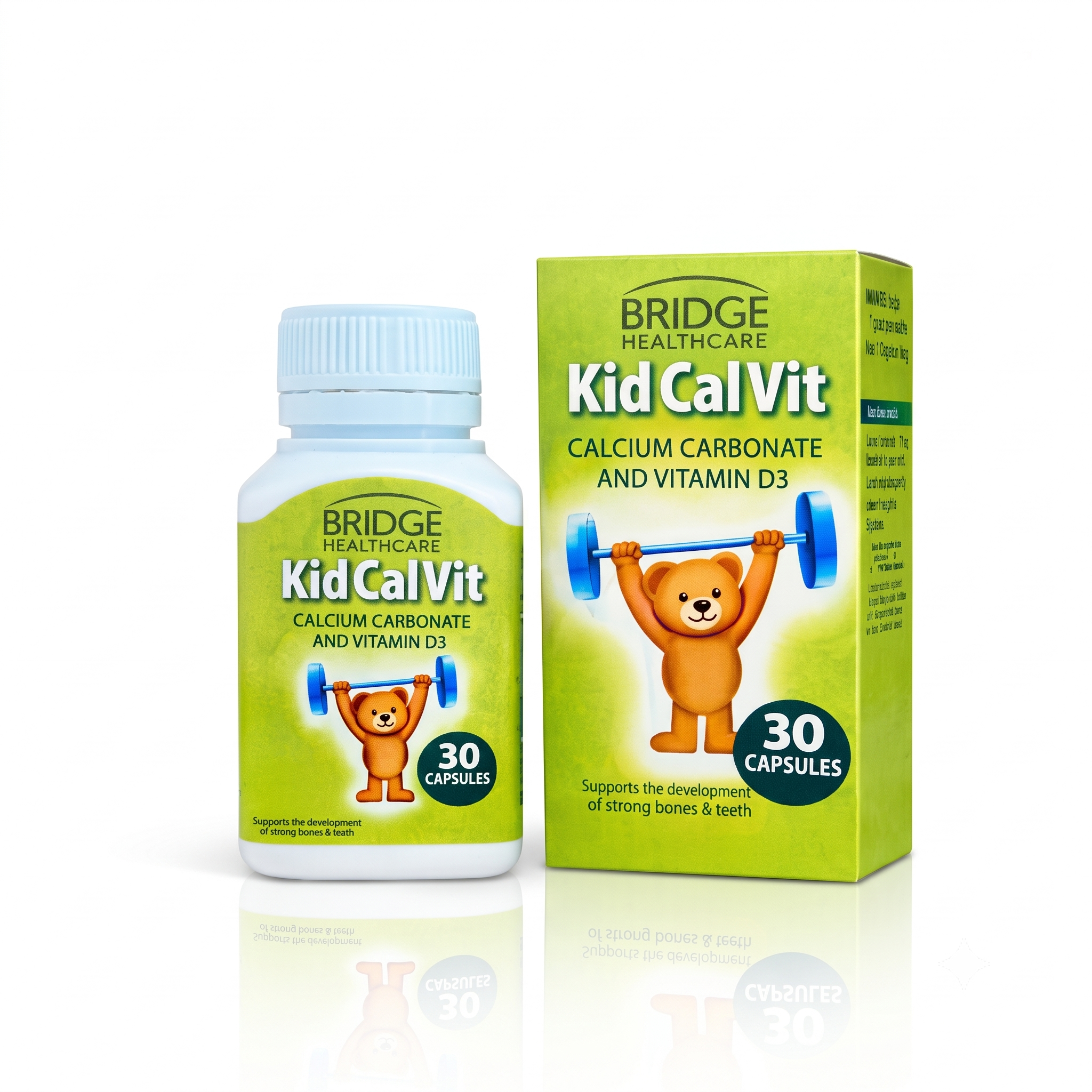
KIDCALVIT
Provide children three years and older with the benefits of both Calcium and Vitamin D3
Bottle of 60 chewable capsules
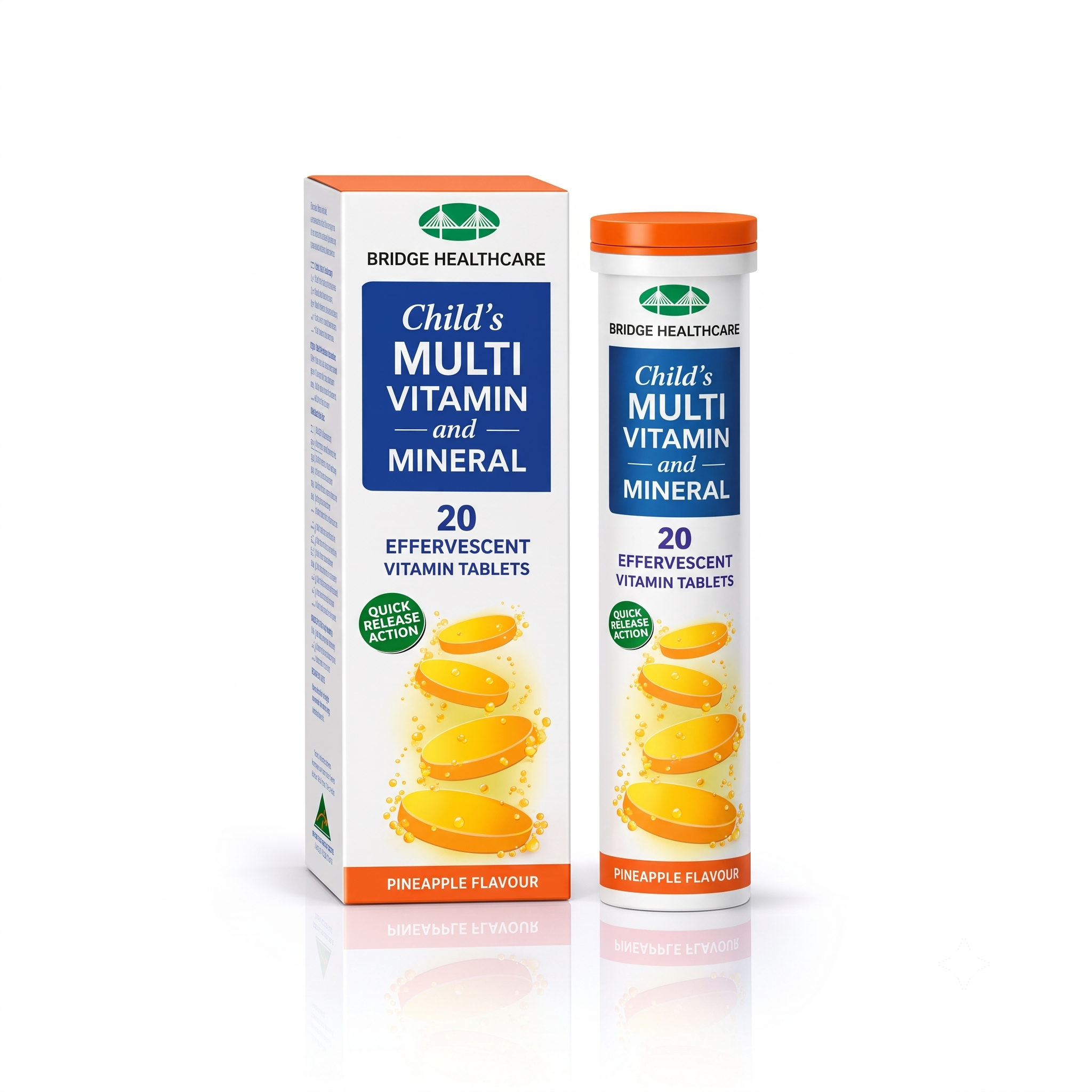
CHILD'S MULTI VITAMIN AND MINERAL
Vitamin and mineral supplements, extra Vitamin C for children. As a therapeutic nutritional adjunct in conditions where the absorption of vitamins and minerals is suboptimal
Tube of 20 effervescent vitamin tablets